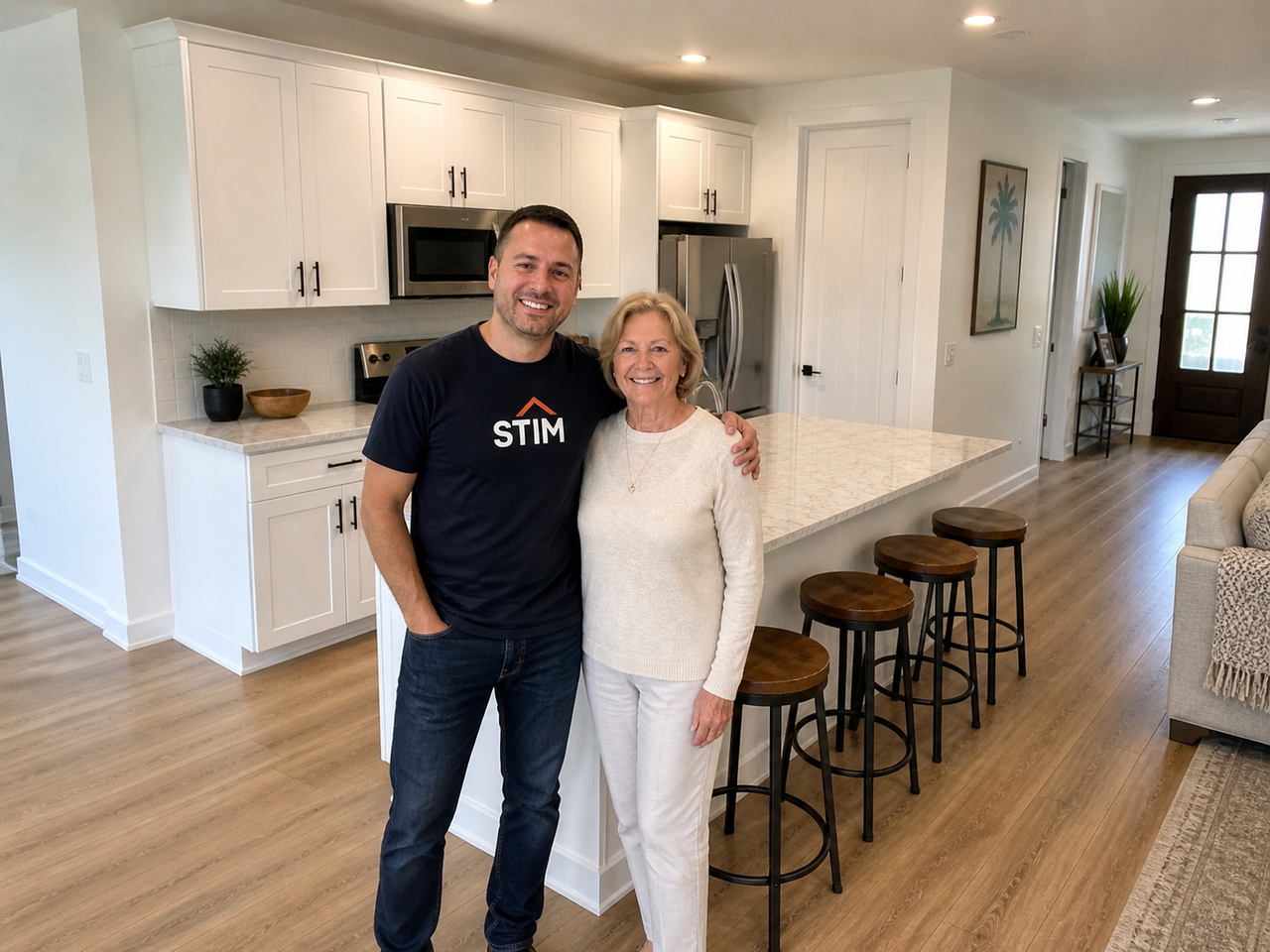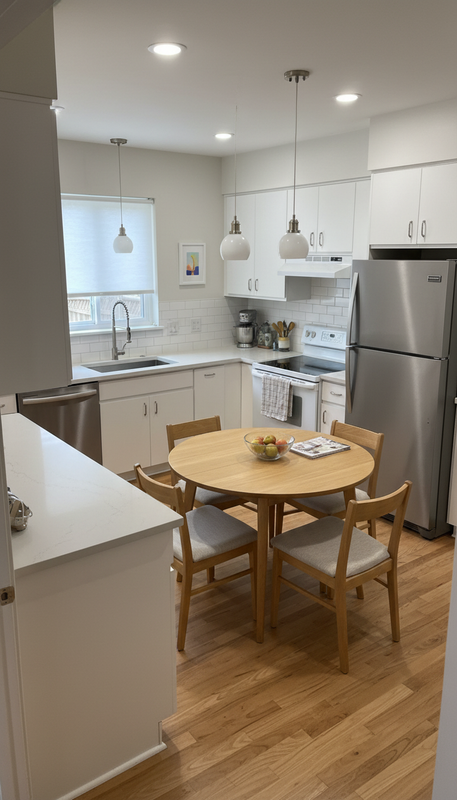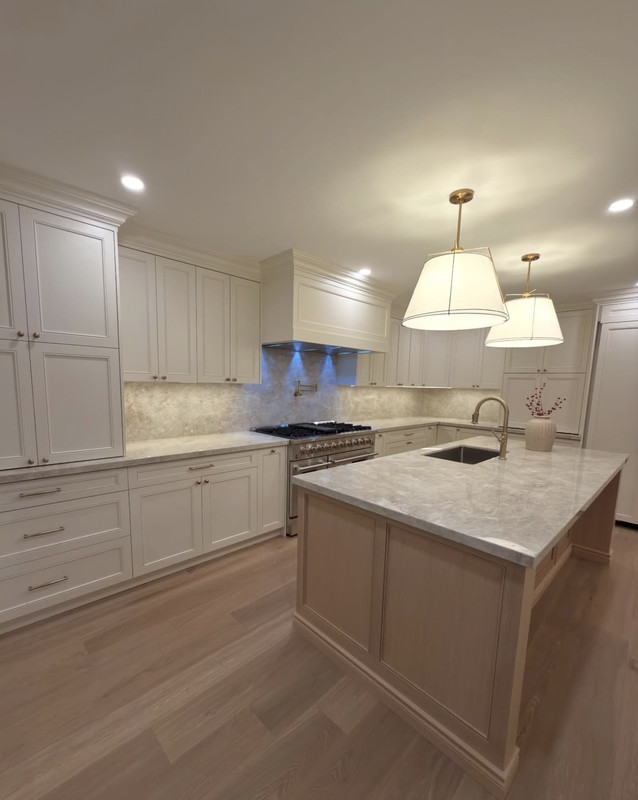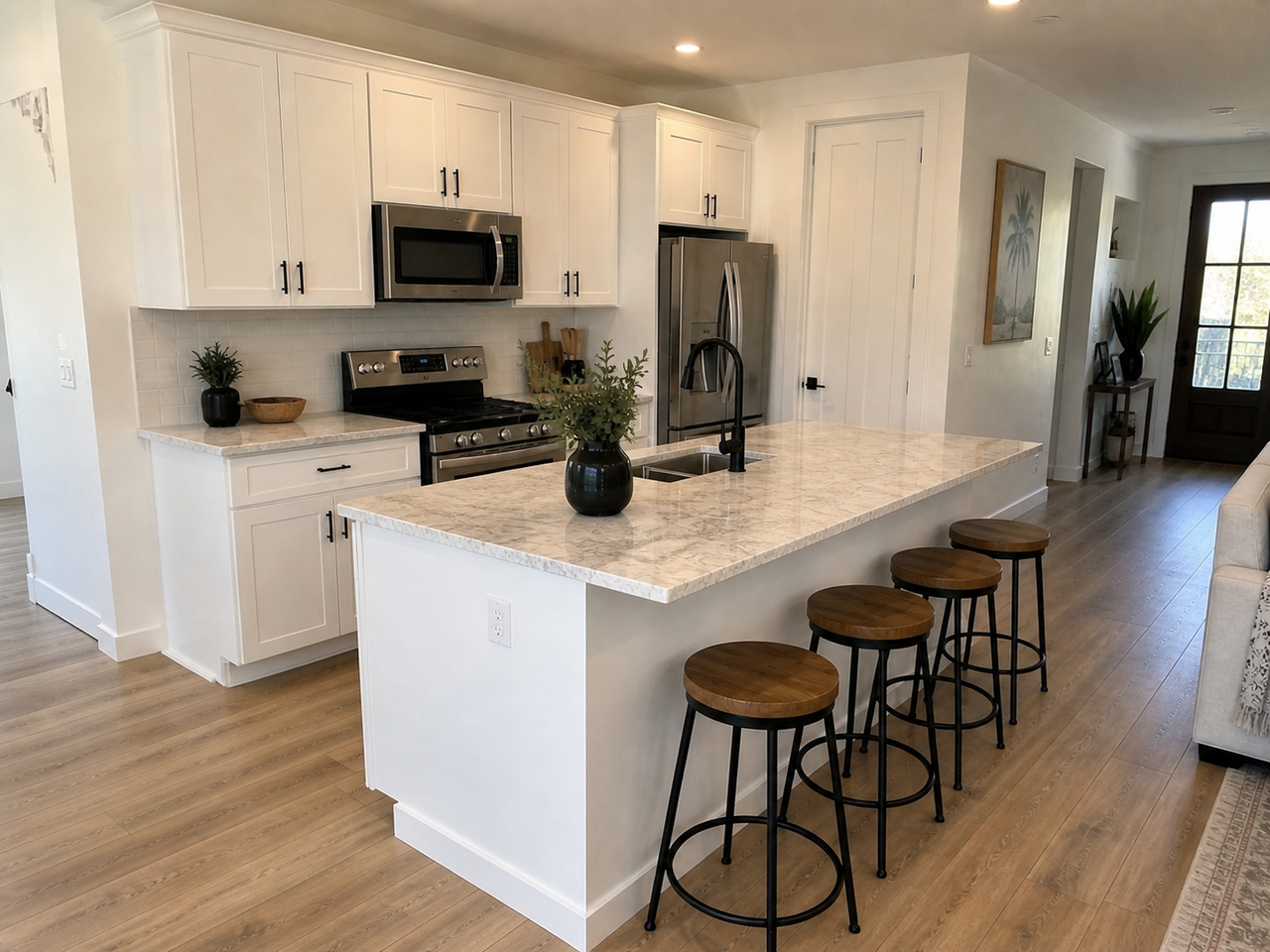
From “I Feel Sad in Here” to Her Favorite Room in the House
A full kitchen remodel with permits, inspections, electrical upgrades, plumbing, tile, quartz island, lighting, and final handoff.
Not just before and after photos. Here you can see how the project actually went: what the client wanted, what we found, how we solved it, and what the final result looked like.
A full kitchen remodel with permits, inspections, electrical upgrades, plumbing, tile, quartz island, lighting, and final handoff.
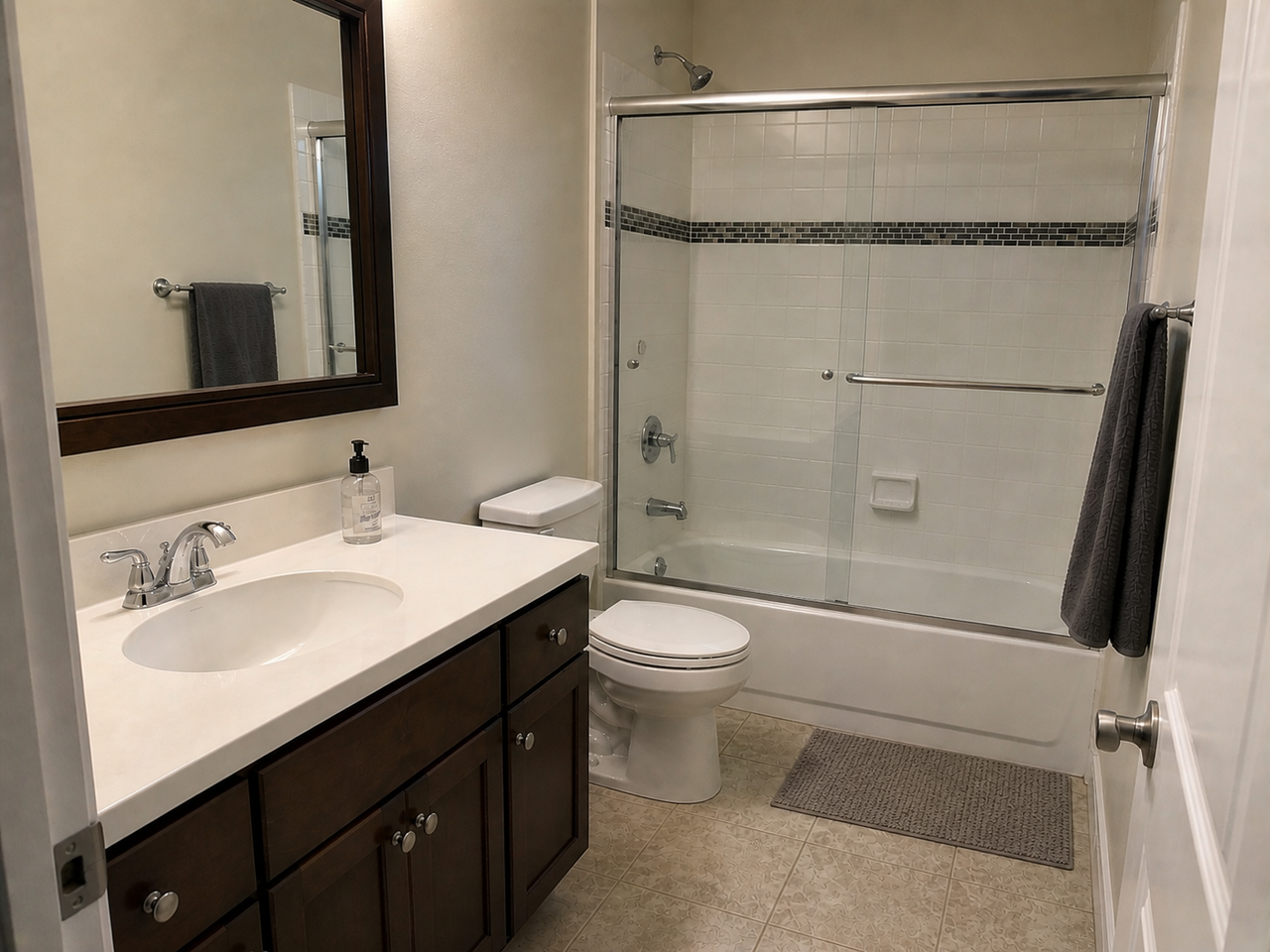
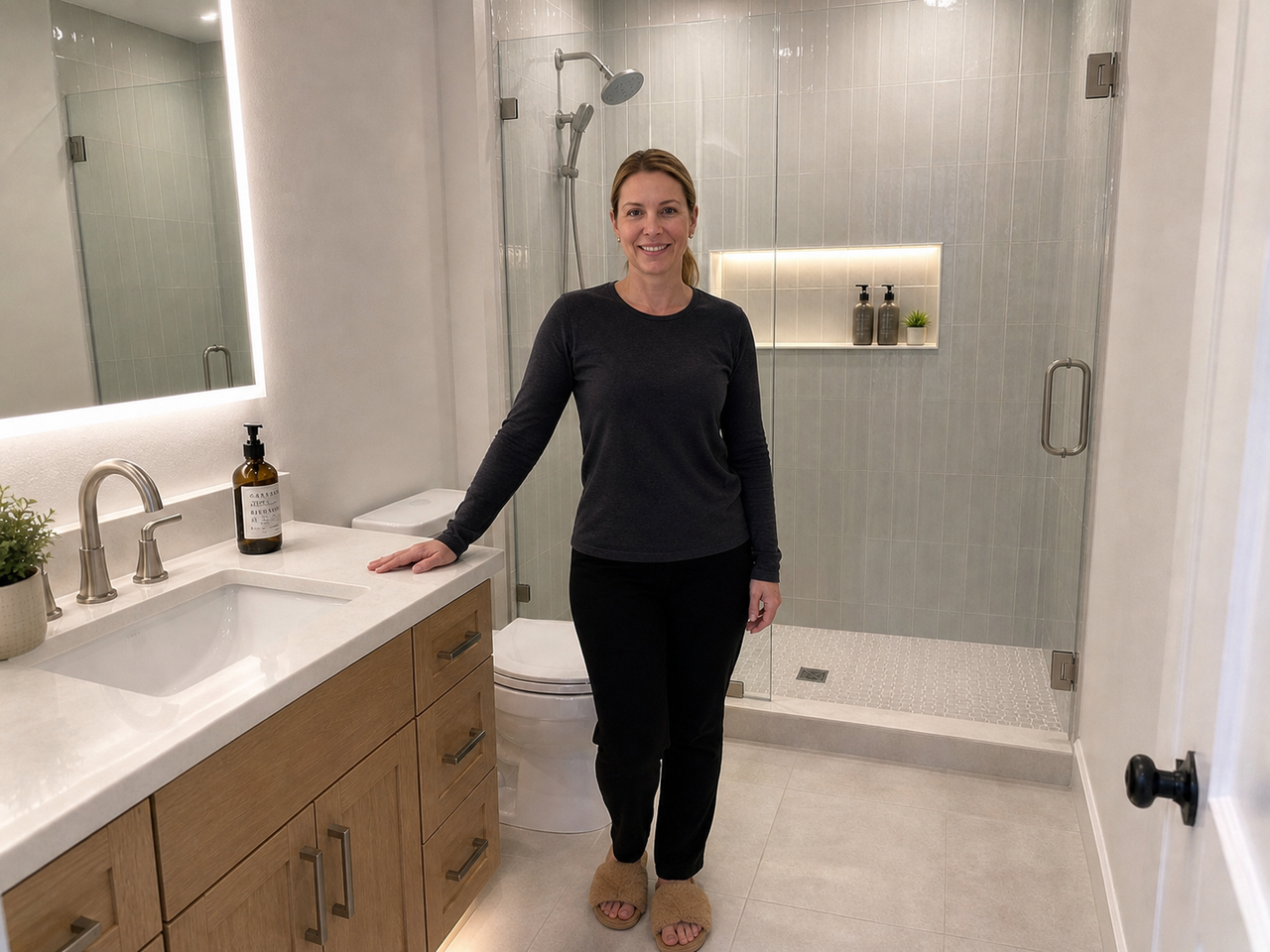
Tub/shower combo out, frameless walk-in shower in, new vanity, recessed lighting, permits and inspections.
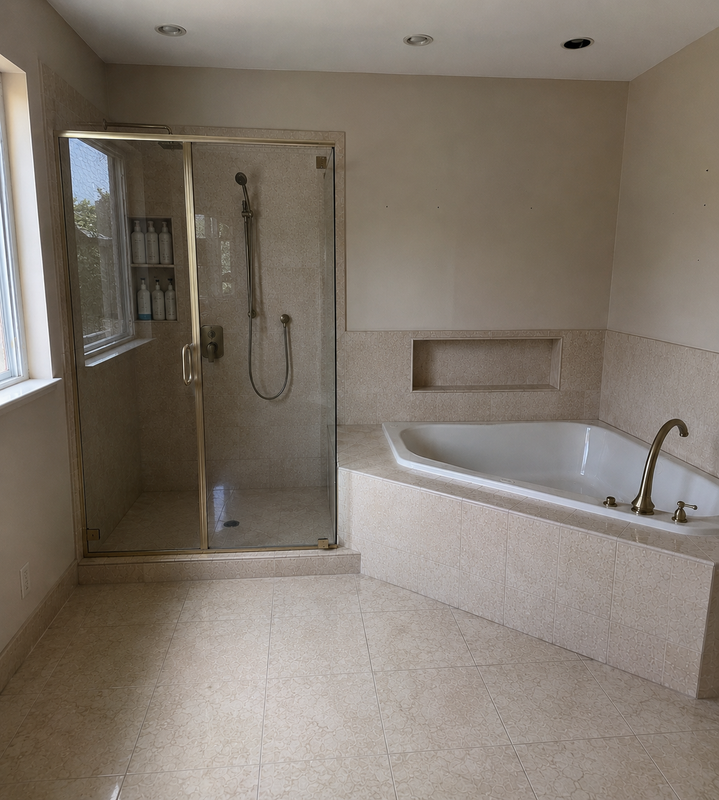
A full primary bathroom remodel under a hard deadline: shower, freestanding tub, vanity, tile, permits and inspections.
Fast visual upgrade with modern lighting, vanity, paint, mirrors and fixtures.
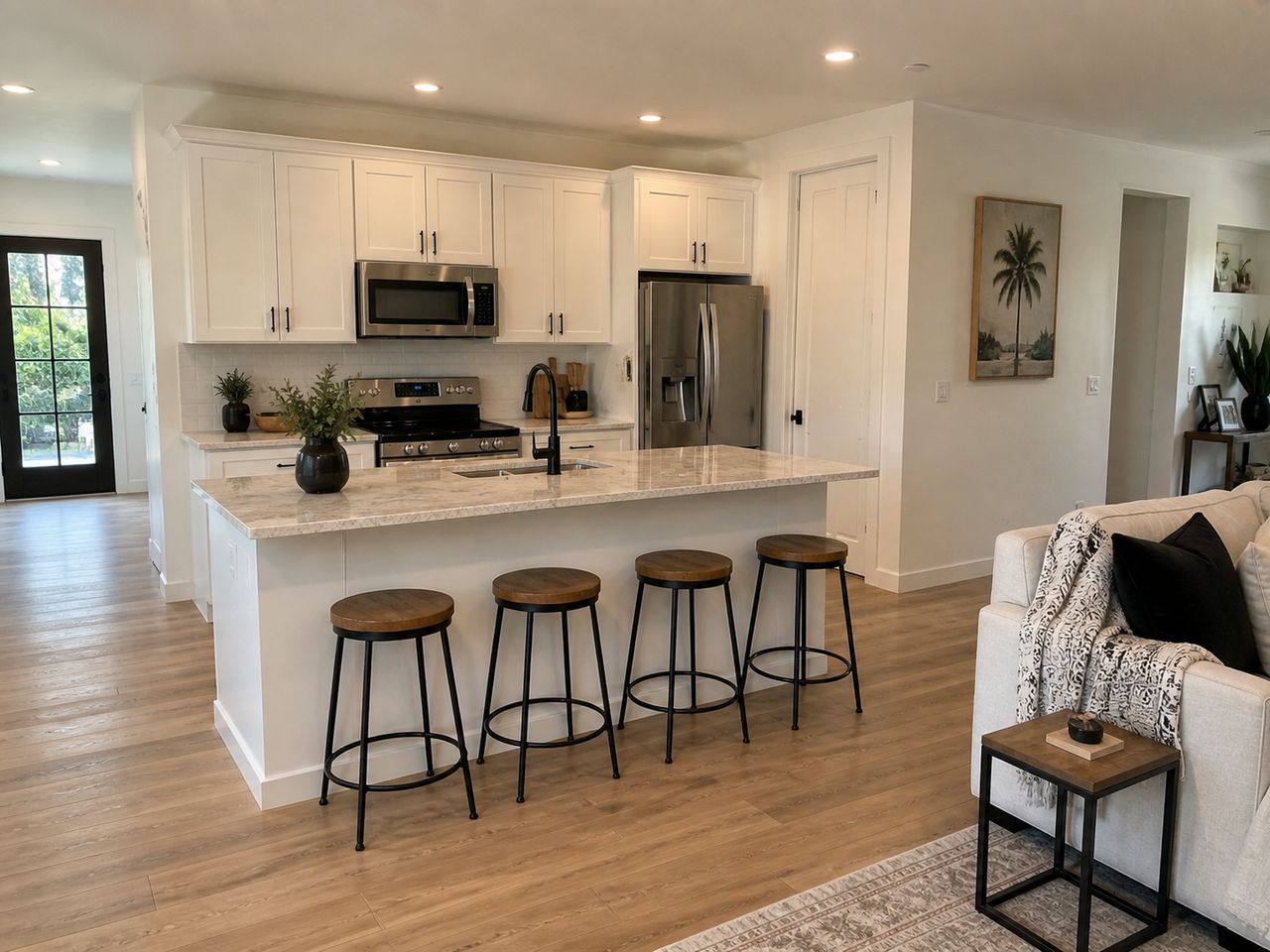
A full kitchen remodel in Concord, CA — from the first phone call to happy tears on handoff day. We pulled every permit, passed every inspection, and found one very unpleasant surprise hiding under the old tile. Here's the whole story.
Linda called us in late October. Her voice was calm, a little tired — the kind of tired you hear from someone who's already gotten a handful of bids and hasn't loved what they've heard. She wasn't asking for anything crazy. "I'm 62," she told us. "The kids are grown, they've all moved out. It's just me and Dan now. I just want to actually enjoy cooking in my own kitchen. I just want it to feel bright."
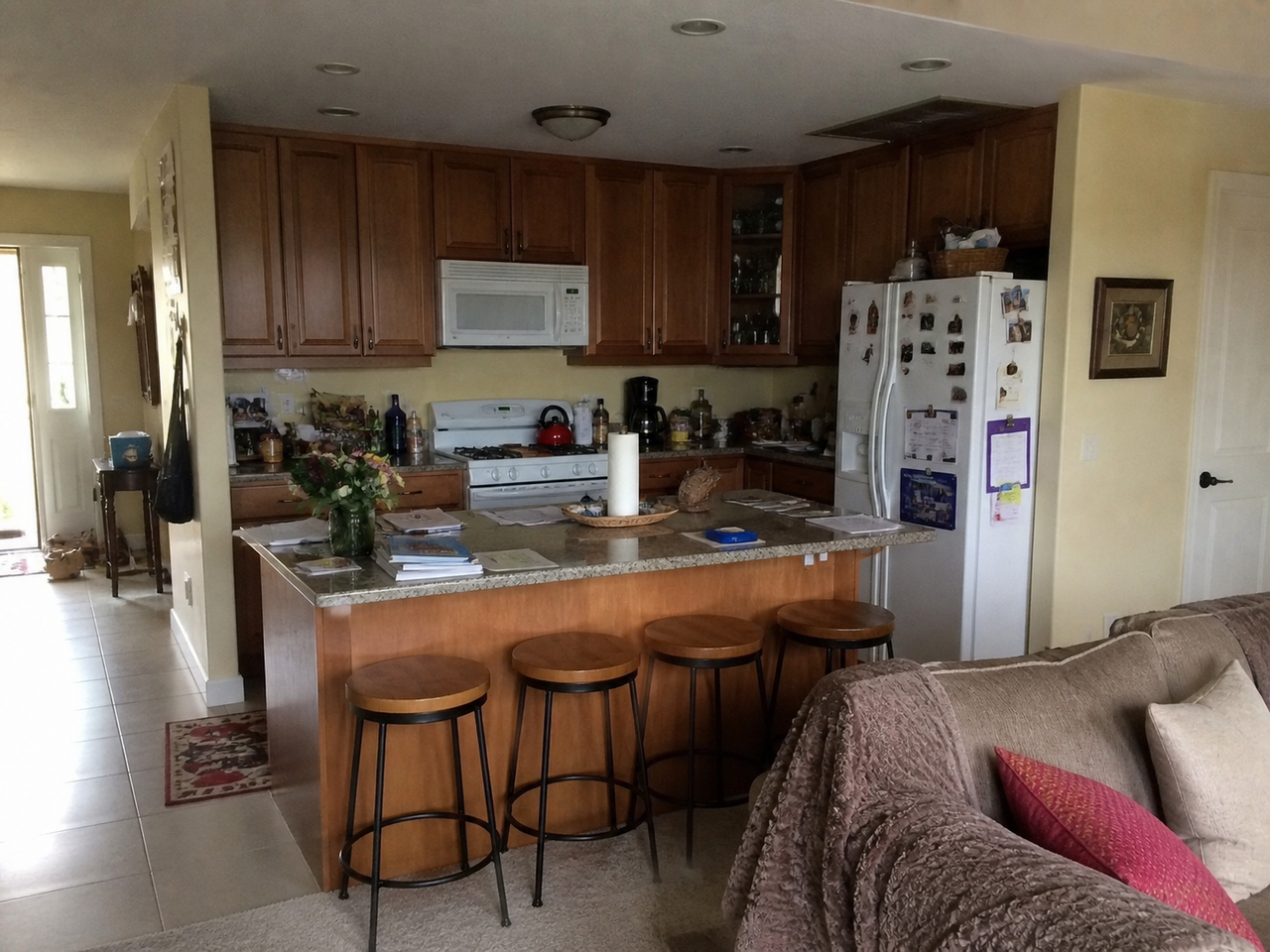
Two days later, we were at her place off Coronado Drive. Classic Concord late-90s build — warm, lived-in, a little tight in the kitchen area. Linda met us at the door with coffee and walked us straight to the island. "This is where I spend all my time," she said. "But honestly? Every morning when I walk in here, I feel a little sad."
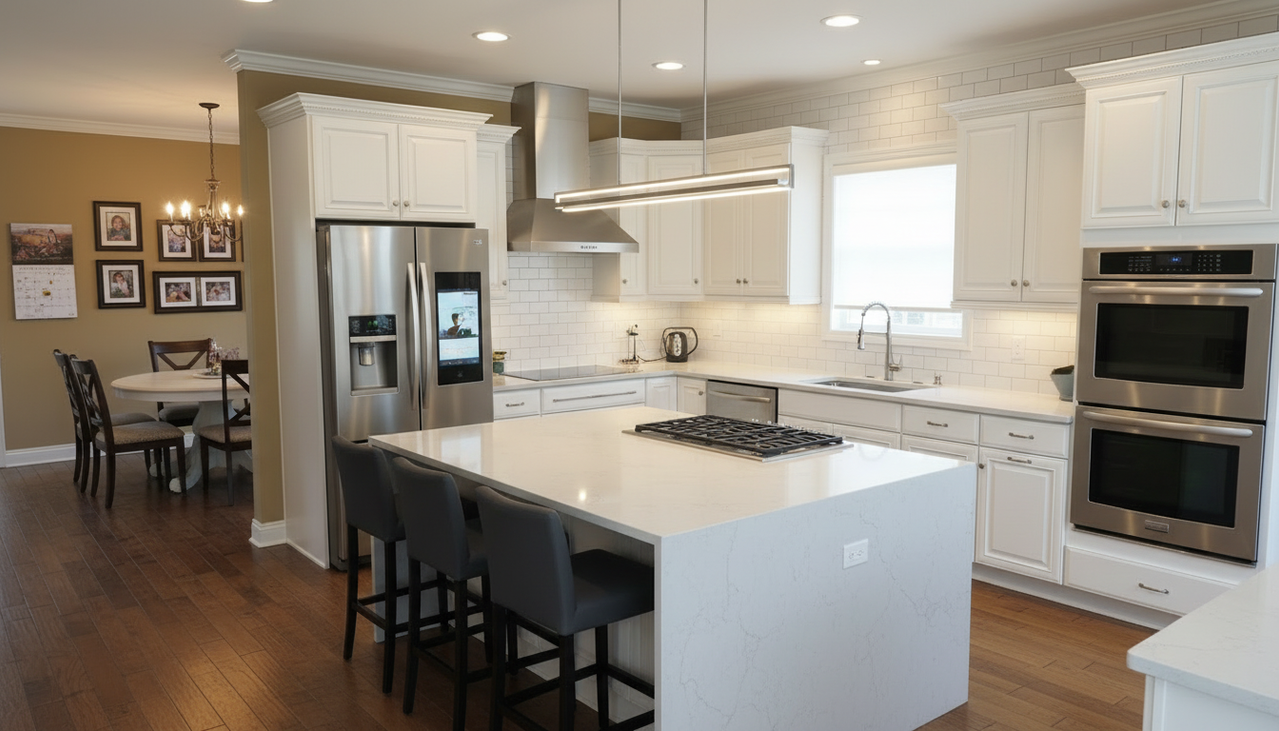
We got it immediately. The dark honey-stained cabinets were eating every bit of natural light. The white appliances were pushing twenty years old. The tile floor had grout lines that hadn't been the same color in a decade. And the tiled countertop on the island — sure, it was practical once. Now it just looked like 2003 refused to leave. We knew exactly what needed to happen.
"Every morning when I walk in here, I feel a little sad."
— Linda, homeownerThe good news: the layout actually worked. The island was in the right spot, the work triangle between the range, sink, and fridge made sense. No walls coming down — that's always a win for the budget. But a few things caught our eye right away, and we told her about all of them on the spot.
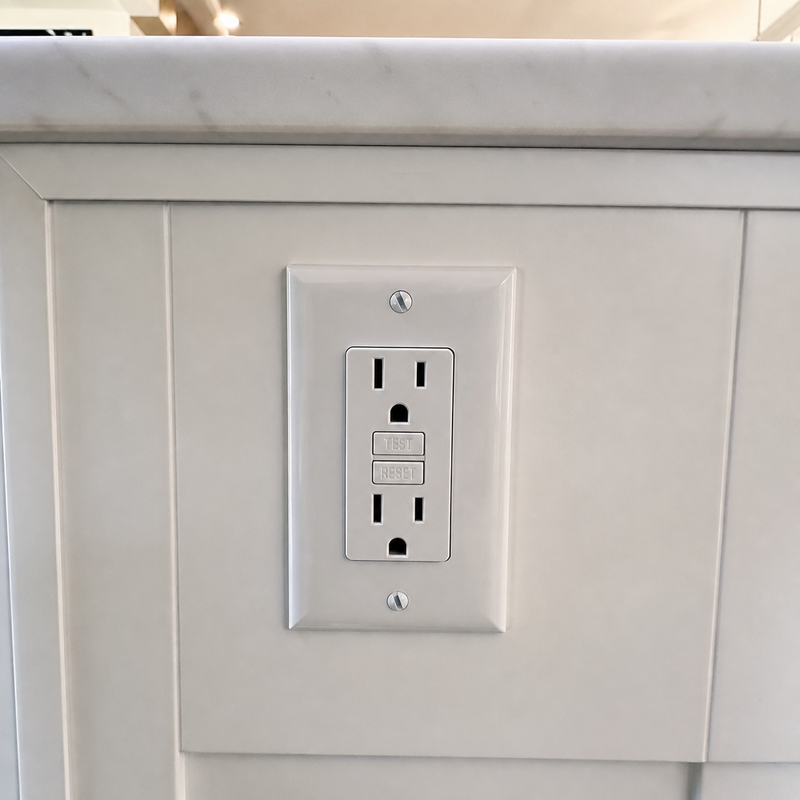
The outlets on the island had no GFCI protection. Under California Building Code and the NEC, that's required for any outlet within six feet of a sink — including island outlets, no exceptions. The moment we touched the electrical, everything had to come up to current code.
The over-the-range microwave was running in recirculation mode — basically pushing air through a charcoal filter and blowing it right back into the kitchen. Linda wanted a real exhaust hood that vented outside. That meant a new duct run and a mechanical permit.
The kitchen tile butted right up against the living room carpet. If we were replacing the floor — and we were — the transition detail had to be done right. A sloppy threshold is one of those things that bugs you every single day for the next ten years.
At our second meeting, we didn't just bring an estimate — we brought a permit list. Linda raised an eyebrow: "Do we really need all that? My neighbor redid their kitchen and didn't pull a single permit." We gave her the straight answer.
Unpermitted work in California is a ticking time bomb. It shows up on the disclosure when you sell. Your homeowner's insurance can deny a claim if the damage is tied to work that was never inspected. And most importantly — nobody ever checked if it was done right. We pull permits because we actually care what happens to your home ten years from now. We handled all the paperwork ourselves. Linda didn't have to drive anywhere or sit in a line at the permit counter. She signed one authorization form, and we took it from there.
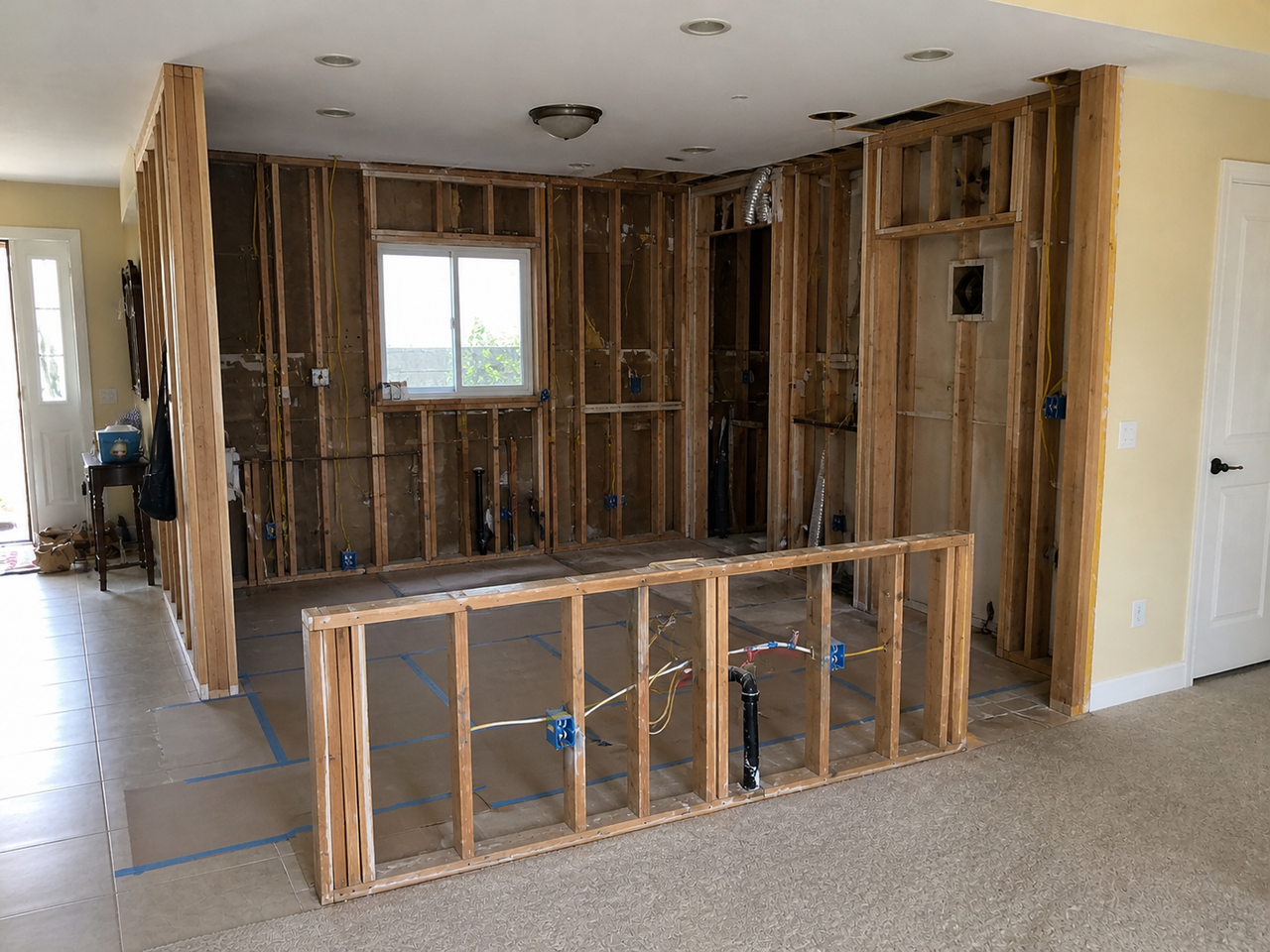
First day on the job always has that "let's see what we're actually dealing with" energy. You never really know what's hiding behind old finishes. Once the cabinets were out and the walls were open, you could see everything — the old wiring, the plumbing rough-in, the framing. This is the moment we love and dread at the same time.
When we pulled the tile off the island countertop, we found what we'd been hoping we wouldn't — a patch of moisture damage under the substrate. Old sink leak, someone "fixed" it by just tiling over it. The wood hadn't rotted all the way through — lucky break — but it needed to be dried out, treated with antimicrobial primer, and partially replaced.
We called Linda that same afternoon. Sent her photos, explained exactly what we found, and gave her the additional cost upfront. She went quiet for a second, then said: "Good thing you found it. Go ahead." That's how trust actually gets built — not with slick presentations, but with an honest phone call at an inconvenient moment.
The electrical on this kitchen wasn't dangerous. But it was outdated — and that's an important distinction. Breakers weren't tripping, lights came on, everything seemed fine. The problem is that code has changed significantly since this house was built in the late '90s, and what passed inspection back then doesn't fly under the current California Electrical Code.
Our electrician Ricardo — he's been with us for five years — started with a full panel audit. Good news: the panel was 200-amp, plenty of headroom. The issue was that the kitchen circuits were all lumped together, which under current NEC rules isn't acceptable for certain dedicated appliances.
GFCI stands for Ground Fault Circuit Interrupter — it's the outlet with the TEST and RESET buttons you've probably seen in bathrooms. In a kitchen, it's required on every outlet within six feet of any sink, including island outlets, regardless of whether there's a sink on the island or not. That's NEC section 210.8(A)(6), and California follows it.
None of the four island outlets in Linda's kitchen had GFCI protection. Ricardo swapped all four out and wired them correctly: the first outlet in the run has the protection built in, and the downstream outlets are covered by it. Clean, code-compliant, done right.
Linda's new fridge came with an ice maker and a built-in water dispenser. Per NEC 210.52(B)(1), that kind of appliance should be on its own dedicated 20-amp circuit. Ricardo ran a fresh 12 AWG line straight from the panel — no splices, no sharing. The dishwasher got its own dedicated 20-amp circuit too. The island outlets went on their own 20-amp circuit so running the stand mixer and the toaster oven at the same time doesn't trip the breaker mid-batch of cookies.
Linda never mentioned lighting as a separate item. But we could see it: the old recessed cans were putting out that flat, depressing overhead light. We suggested adding LED strip lights under the upper cabinets — warm white, 3000K, on a dimmer. She hesitated. "That's extra money." We said: let us put it in, cook dinner with it on one night, and if you don't love it, we'll take it out. Nobody took it out. It's now the first thing she shows people when they come over.
Electrical inspection happened mid-project, while the walls were still open. The inspector went through every connection point. Zero corrections. Ricardo didn't even look nervous — because he had nothing to be nervous about.
Most homeowners think of kitchen plumbing as: sink, faucet, done. But behind that simplicity is a whole web of decisions — where the sink sits, how supply lines are run, where the drain goes, whether there's backflow protection, and whether the trap is properly vented. Get any of those wrong and you've got problems that don't show up until they really show up.
In the original layout, the sink was tucked into a corner section, deep in the back of the workspace. When you're doing dishes, you're facing the wall with your back to the living room and to whoever's sitting at the island. Linda had just gotten used to it. We suggested moving the sink onto the island — right where you can see the room, talk to Dan, and actually enjoy being in the kitchen.
That required a plumbing permit and a lot more work than just swapping out a fixture. Our plumber Marco ran new hot and cold supply lines under the subfloor. The drain was stubbed out with the right slope — a minimum of 1/4 inch per foot of run, as required under California Plumbing Code section 708. Not a suggestion. The law.
When a sink is on a freestanding island, venting the trap gets complicated. Without proper venting you get that gurgling sound every time water goes down — not just annoying, it's a code violation. Marco installed an AAV — an air admittance valve — inside the island cabinet, accessible through the door. Under CPC section 908, that's a perfectly code-compliant solution. The inspector signed off on it. It works silently. Problem solved.
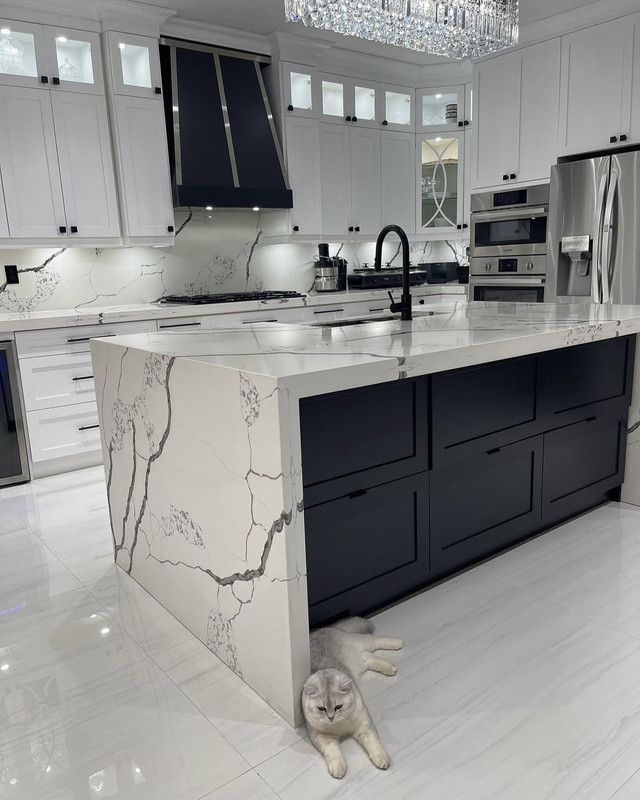
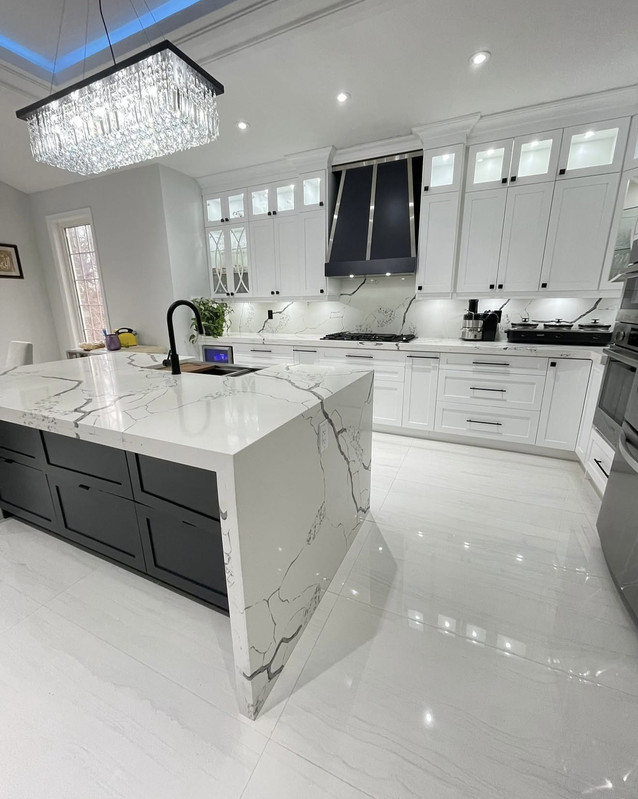
Linda knew right away she wanted matte black. We walked her through the checklist: spout height (for an island sink, you want at least 10 inches of clearance), pull-down sprayer with a separate spray mode, and compatibility with the water pressure in Concord, which typically runs 60–80 psi. She ended up with a 16-inch high-arc pull-down in fingerprint-resistant matte black with a ceramic disc cartridge. Marco pressure-tested everything. Not a drip, not a wobble in the base.
When Marco disconnected the old dishwasher, he found the drain hose had been run without a high loop and without an air gap — meaning dirty water from the sink could siphon right back into the dishwasher. Under the CPC, that's a straight-up sanitary code violation. He installed a proper air gap on the countertop — that small chrome cap next to the faucet that most people assume is decorative. Linda didn't want "another hole in the countertop." Now she's the one explaining to dinner guests what it does and why their kitchen probably doesn't have one.
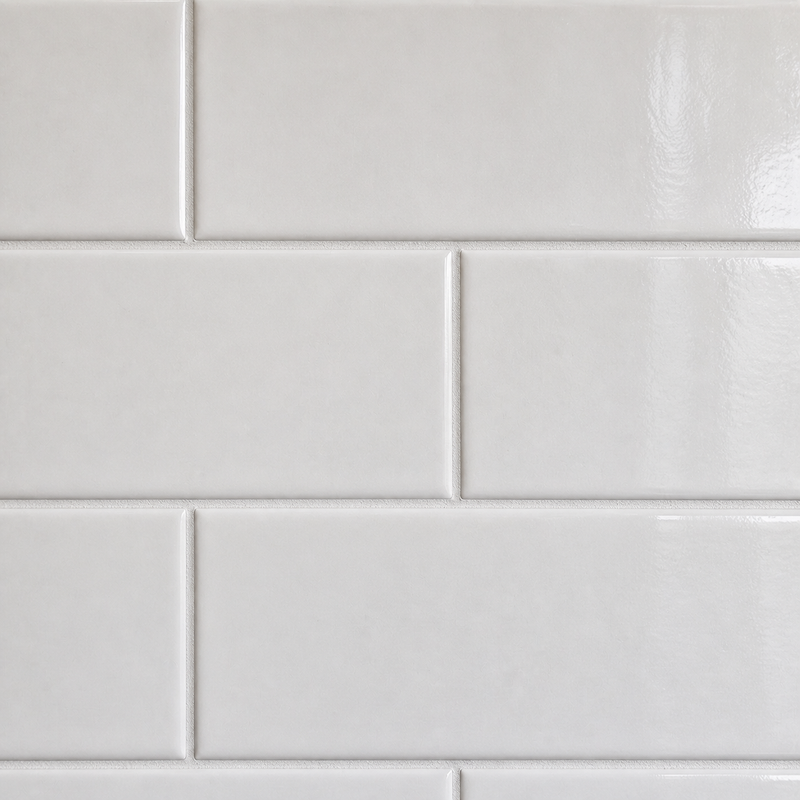
Subway tile is a classic for a reason. White 3×6 rectangles in a running bond — half-brick offset — has been working since the New York City subway opened in 1904, and it's going to keep working for the next hundred years. But "simple" tile requires perfect execution. There's nowhere to hide. Any wavy line, any uneven grout joint — it all shows up immediately.
Our tile guy Alejandro won't set a single tile until the substrate is right. Before he touched a tile, he spent half a day on prep — demoed the old backsplash, floated the surface with leveling compound, checked it with a 6-foot level. Across the entire backsplash — countertop to the bottom of the uppers — less than 1/8 inch of variation. Only then did he start laying out the field.
Most DIYers start tiling from the bottom — off the counter. Alejandro starts by finding the optical center of the most visible section of wall and snapping a horizontal line from there. That way the tile reads as balanced and intentional from across the room. At the corners, he never cuts tile down to a sliver — the smallest piece is always at least half a tile wide. Takes longer to plan. Looks exponentially better in the end.
Linda's first instinct was bright white grout. We gently pushed back — white grout in a working kitchen is beautiful on day one and a full-time job after that. We brought in samples: Mapei Warm Gray #112 and Mapei Biscuit #35, held them up under actual kitchen lighting. The warm gray won in about thirty seconds. Alejandro grouted in two passes, 1/16-inch joints. After cure, the whole surface got sealed with penetrating silicone sealer to lock out moisture and grease.
After everyone had left, Alejandro came back and walked the entire backsplash one more time with a flashlight held at a raking angle. Low-angle light catches any lippage or hollow spots invisible under normal overhead lighting. He found two small areas where the mortar had pulled slightly from a bullnose trim piece. Reglued both. Left around midnight. Linda will never know that happened. But that's what actual quality control looks like — not a marketing line, but a guy with a flashlight at midnight in someone else's kitchen because it wasn't quite perfect yet.
The day before the official final inspection, we ran our own. Checked every cabinet for level and alignment. Pressed on every tile. Tested every GFCI outlet. Ran the faucet and checked under the island for drips. Ran the dishwasher through a full cycle. Held a piece of paper over the range and turned on the hood — it pulled the paper flat against the filter in under a second.
We found one thing: a piece of crown molding above the upper cabinets had a hairline gap at an inside corner. Re-caulked and touched it up that same evening. By the time Linda walked in, it didn't exist.
The City of Concord inspector arrived the following morning. He went through all four permits — checked the outlets, looked under the island at the trap and air gap, went up into the attic to verify the duct connection. Signed off on everything. No corrections, no call-backs. All four permits closed out clean.
Linda came by on a Friday morning around 10. We'd asked her to stay off the job site for the last three days — we wanted the reveal to land all at once. She stood in the doorway for a solid ten seconds, just taking it in. Then she walked to the island, ran her hand across the quartz countertop — right where that old cracked tile used to be — and turned around to face us.
"You built what I had in my head but couldn't explain," she said. And then she cried. The good kind.
Dan had been standing a few steps behind her the whole time. He's not a big talker. He just walked up and shook our hands. Firm grip. That was enough.
It's not about the before-and-after photos — though they speak for themselves. We share the full story because we want you to understand what a remodel actually is: a few weeks where you let strangers into your home and trust them with the most personal space you have.
We pull permits because we respect your home and your investment in it. We call you the same day we find a problem — not at the end of the job. We go to the showroom with you, because picking materials shouldn't feel like homework. We do our own final walkthrough before you ever set foot inside, because what you see on day one matters to us.
Ricardo runs a dedicated circuit because it's the right way to do it — not because the inspector is watching. Marco installs the air gap because it protects you — not because it's the path of least resistance. Alejandro comes back at midnight with a flashlight because he can't leave something that isn't right.
Linda texted us about a month after we wrapped up. She said she's been waking up thirty minutes earlier than usual — just to sit at the island with her coffee before Dan gets up. "I couldn't explain why I felt sad in there before. Now I can't explain why I feel so good." That's why we do this work.
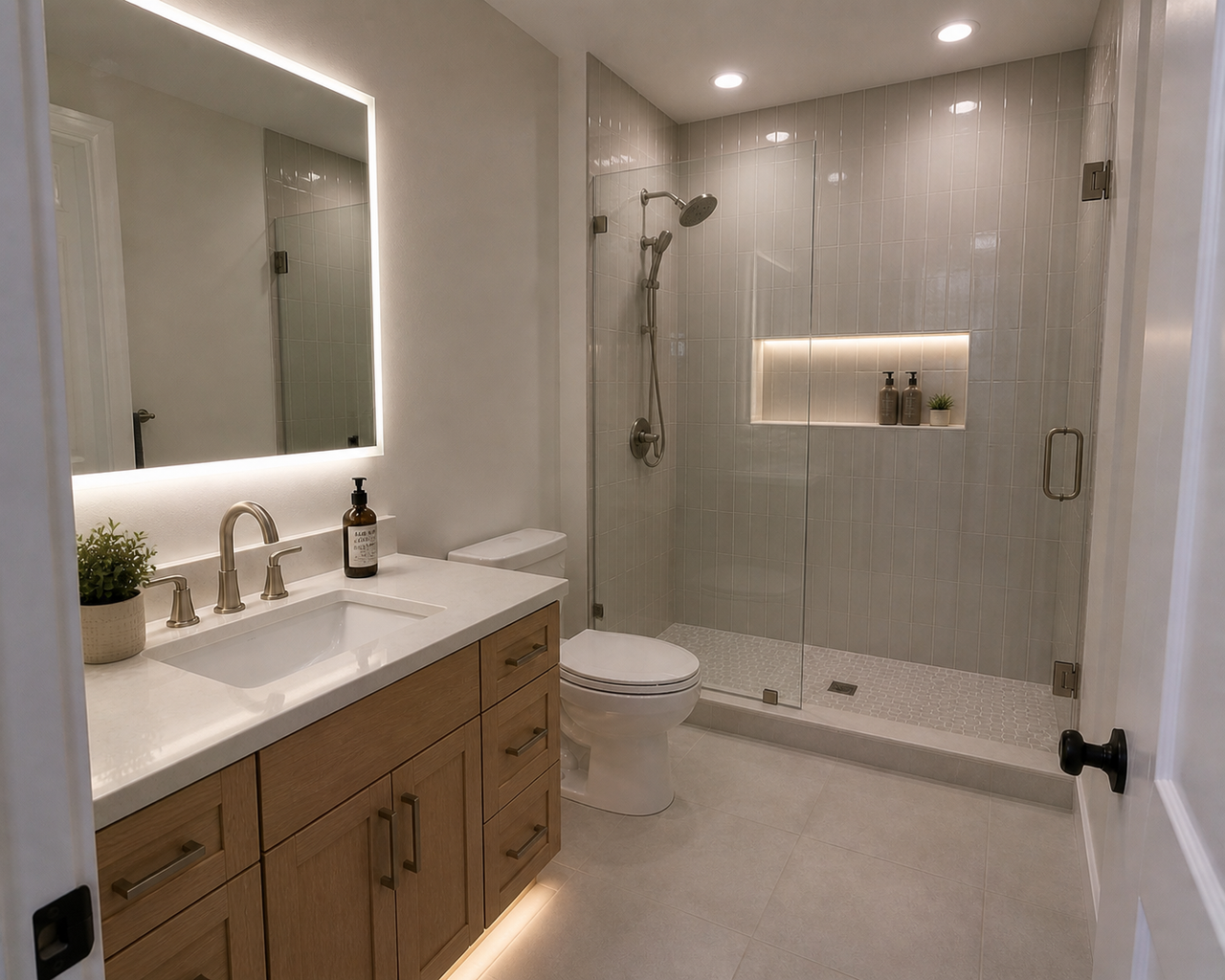
A guest bathroom remodel in San Jose — tub/shower combo out, frameless walk-in shower in, new vanity, recessed lighting, and a backlit mirror that became everyone's favorite detail. Permits pulled, rough-in inspections passed, and one honest conversation about a drain nobody wants to think about until it's too late.
Michael called us in early March. He and his wife bought their house in the Cambrian Park neighborhood of San Jose back in 2015 — a well-kept three-bedroom from the early 2000s, two bathrooms, good bones. The primary bath had already been updated by the previous owner. The guest bath had not.
"Honestly, we haven’t touched that tub in years," he told us on the phone. His kids were grown. The tub/shower combo — sliding chrome doors, dark espresso vanity with those round knobs, white tile with the dark mosaic accent strip running across the middle — was functional, he said. Just stuck in time. "It feels like we walked into 2007 every time we go in there."
His wife Sara wanted better lighting above everything else. The single overhead fixture barely lit the vanity, and she’d been getting ready under bad light for a decade. Michael wanted to rip out the tub and put in a real walk-in shower. They both wanted the room to feel like it actually belonged in their house. We came out the following week, took measurements, looked at the plumbing wall, and checked the subfloor access. Then we had the conversation we always have before anyone commits to a tub removal.
“It feels like we walked into 2007 every time we go in there.”
— Michael, homeownerIn California, and especially in the Bay Area, this question matters more than people expect. It’s not a building code question — it’s a resale question, and we ask it out loud every single time.
A single-bathroom home that loses its only tub loses a significant percentage of potential buyers — specifically families with young kids. In San Jose’s housing market, where every dollar of assessed value matters, that’s not a theoretical concern.
Michael and Sara’s home has two bathrooms. Their primary bath has a full soaking tub. The guest bath is used by their college-age daughter when she’s home and by occasional overnight guests. In a two-bath home in the Cambrian area, converting the secondary bath from a tub/shower combo to a walk-in shower is a very standard and well-accepted upgrade. We told them it was a sound call, and we meant it.
Demo in a bathroom always has a moment. The sliding glass door came out first — those chrome-framed units from the early 2000s are heavier than they look, and the bottom track had years of buildup that wasn’t coming out any other way. The tile surround came next, then the cement board behind it, then the tub itself — a standard fiberglass alcove unit, one-piece. Unremarkable in every way. It had probably never given anyone a moment of trouble. It also had never given anyone a moment of joy.
Behind the walls: dry, which is the best possible news. No active leaks, no rot in the framing, no surprises in the subfloor. The drain stub-out was cast into the concrete slab — this house is slab-on-grade, which is typical for this part of San Jose. That meant the drain location couldn’t simply be moved by rerouting a P-trap in a crawl space. Moving the drain meant cutting the slab. We cut the slab. It’s the right call for a proper walk-in shower on slab construction, and it’s exactly what the plumbing permit was for.
The original tub drain was centered under the tub footprint. The new walk-in shower needed a linear drain positioned at the back wall — both for aesthetics and to allow the floor to slope in a single plane toward one edge, which is required when setting large-format tile on a shower floor. Repositioning a drain on a slab means cutting concrete, rerouting the 2-inch ABS drain line to tie into the existing 3-inch branch that runs to the vent stack, and patching the slab back. We pulled the permit through the City of San Jose Development Services Department, and the rough-in was inspected before the slab patch was poured.
Once the framing was exposed and confirmed dry, we installed Schluter Kerdi board on all three shower walls — a foam-core panel that is itself waterproof, unlike cement board which is water-resistant but not waterproof. Every seam, corner, and penetration was set with Kerdi-Band and unmodified thinset before a single tile went up. The niche opening was framed during rough-in, waterproofed on all five interior faces, and inspected before tile. This is the system we use on every shower we build. It costs more than traditional methods and it is worth every dollar.
Two permits on this project, both through the City of San Jose. We handled all paperwork — Michael never had to set foot in a permit office or navigate the online portal.
The plumbing permit covered the slab cut, drain relocation, the new PVC rough-in to the vent stack, and the handheld shower supply stub-out. The inspector confirmed the slope on the drain line was correct — minimum 1/4 inch per foot per California Plumbing Code section 708.1 — and signed off before we poured the slab patch.
The electrical permit covered three recessed wafer lights on a dimmer circuit, the LED backlit mirror, and a new GFCI-protected outlet inside the vanity cabinet. We upgraded the exhaust fan to a 110 CFM unit on its own switched circuit, as required by California Mechanical Code section 1203.4 for bathrooms without operable windows. Everything was inspected at rough-in, before drywall closed.
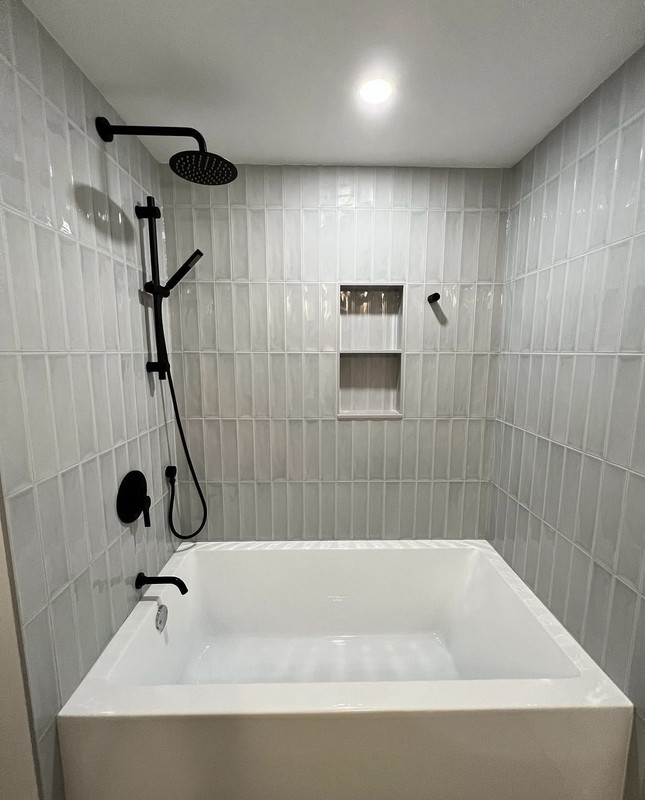
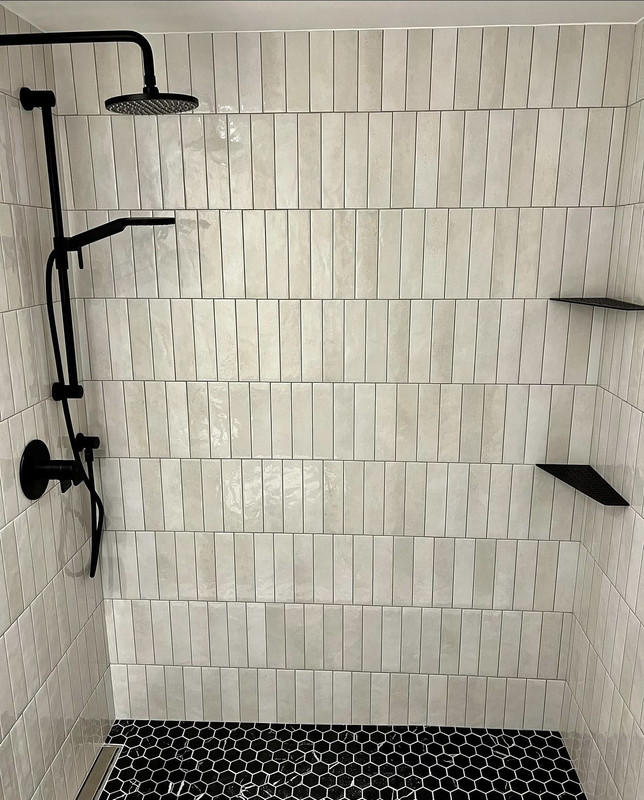
Michael had a clear direction: light, calm, nothing trendy enough to look dated in five years. We went to our tile supplier in Santa Clara together. He landed quickly on a 2×8 elongated ceramic in a warm light sage-gray — smooth glaze, understated sheen, close to the color of a concrete sidewalk on a dry day. Installed vertically, which is more demanding than horizontal because grout lines run continuous top to bottom and any inconsistency in spacing reads immediately across the whole wall. Our tile setter Alex doesn’t start layout without a laser level and a full dry run. It takes longer. It’s worth it.
Sara’s idea, non-negotiable from the first meeting. We framed it during rough-in at shoulder height, centered on the back wall. Interior dimensions: 24 inches wide by 8 inches tall — deep enough for full-size bottles, shallow enough to waterproof without heroic blocking in the framing. All five interior faces got Kerdi-Band before tile. Inside: white 3×6 subway tile in a horizontal stack, which creates a deliberate contrast against the vertical gray surround. The LED strip at the top edge is a damp-location-rated fixture — not a hardware store strip light. The glow it throws across the shelving is the first thing every visitor comments on.
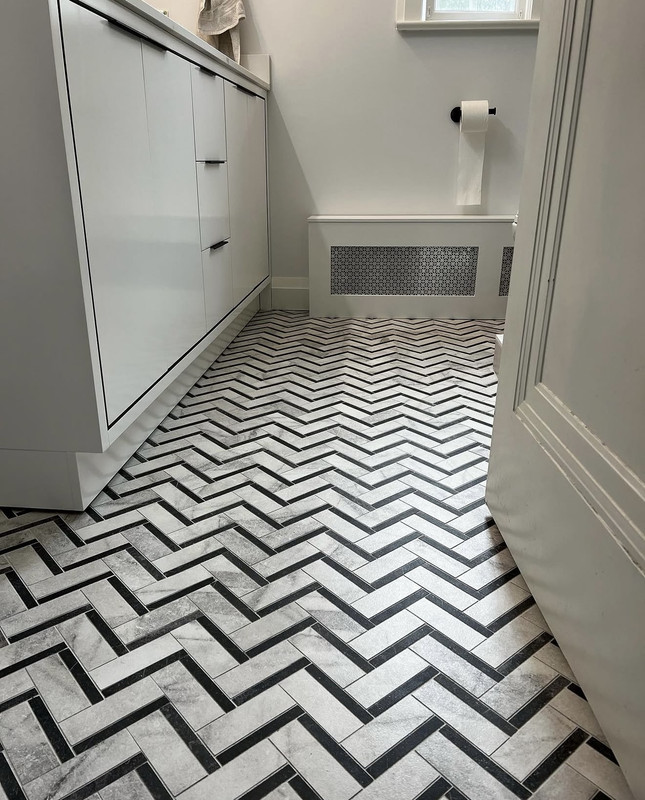
Small-format white mosaic — 1×2 marble-look ceramic, which gives the surface enough grout joints for slip resistance. The single-plane slope runs toward the linear drain at the back wall at a consistent 1/4 inch per foot. Alex set the floor in sections, checking pitch continuously with a level. There’s no dip, no flat spot, no area where water can pool. It drains completely within thirty seconds of the water shutting off.
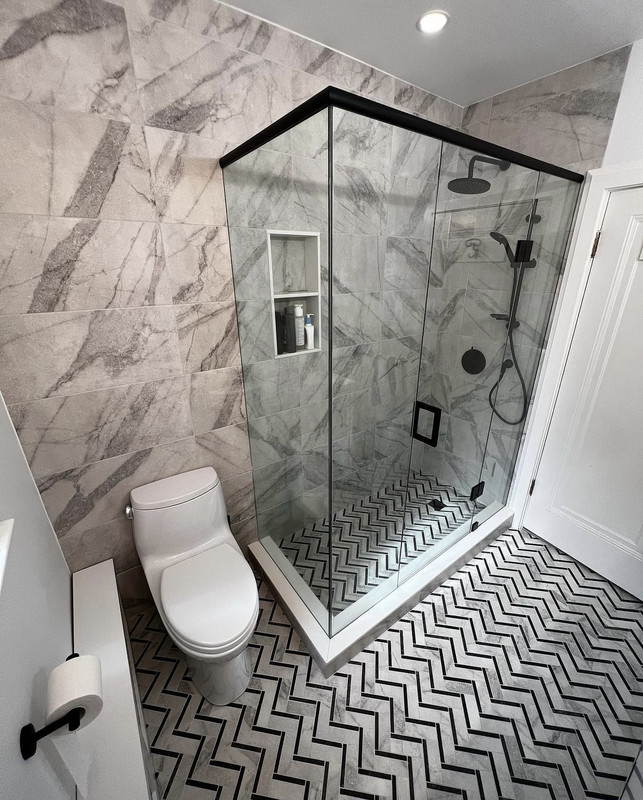
Frameless 3/8-inch tempered glass, pivot-hinged, single panel, brushed nickel hardware. No bottom track, no sliding frame to collect grime. The glass company templated after tile was complete — this is the correct sequence, because tile thickness affects the rough opening dimension. Anyone who templates before tile is guessing at the final measurement.
The old espresso-stained vanity was standard builder issue from around 2003. Solid construction, nothing wrong with it mechanically. But it set the visual tone for the whole room. It came out in one piece and went to Habitat for Humanity’s ReStore in South San Jose.
The replacement: a 36-inch shaker-style cabinet in a natural light oak finish, flat-front drawers, brushed nickel bar pulls. White quartz countertop with an undermount rectangular sink — same countertop material as their primary bath. Sara wanted the two bathrooms to feel like they belonged to the same house. A single-handle brushed nickel faucet with a high arc, compatible with San Jose Water’s typical line pressure of 65–70 psi.
Three 4-inch recessed wafer LEDs on a dimmer, positioned to light the vanity counter without casting shadows under the eyes. The LED backlit mirror replaced the old dark-framed builder mirror. It has a 3000K warm white backlight, a defogging element on its own switch, and a touch dimmer built into the face. Sara tested it at 7 AM on the day we handed over the keys. She stood there for a moment, then turned and said: “This is what I wanted.”
The day before the city inspector came, we ran our own walkthrough. Pressed every tile. Checked every grout joint for holidays — thin spots that look fine dry but fail wet. Ran the shower for fifteen minutes and watched where the water went. Tested the linear drain flow rate. Confirmed the exhaust fan moved air to the exterior. Tested the GFCI outlet. Checked the glass for level and plumb. Found the caulk bead at the glass-to-tile junction on the hinge side had pulled slightly as it cured. We redid it that evening.
The City of San Jose inspector came the following morning. Checked the drain rough-in paperwork against the finished work, looked at the electrical panel for the new circuits, tested the GFCI. Fifteen minutes. Signed off on both permits. No corrections requested on either one.
Michael walked through on a Saturday morning. He stood in the shower for a moment — no water running, just standing there looking at the tile, the niche, the glass — and said: “It’s bigger than it was. How is it bigger? We didn’t move any walls.”
He wasn’t imagining it. The tub/shower combo with its sliding doors and chrome frame occupied the same square footage as the new walk-in, but it enclosed it. Frameless glass and a curbless entry give the eye a clear line through the whole room. The large-format floor tile continuing under the glass threshold instead of stopping at a curb does the same thing. The room didn’t get bigger. It just stopped feeling smaller than it was.
Sara texted us the following Monday. Just a photo — her coffee cup on the new vanity counter, the backlit mirror glowing behind it, 7:15 AM light coming through the door. No caption. She didn’t need one.
A tub-to-shower conversion sounds straightforward. In a slab-construction home, it isn’t. It requires a plumber who understands concrete cutting and drain slope. It requires a tile setter who won’t start until the substrate is right. It requires an electrician who knows the difference between a damp-location rating and a wet-location rating for a fixture going inside a shower niche. It requires someone coordinating all of it who has done it before and knows where the problems hide.
That’s what we do. We pull the permits, manage the subs, show up for every inspection, and don’t hand over keys until we’ve done our own walkthrough first. Michael and Sara got exactly what they described on the first call. That’s the job.
Lisa’s parents were flying in from Vienna in exactly 28 days. The master bathroom was original 1998. We said yes. Here’s what that actually looked like.
She called on a Tuesday. Parents arriving from Vienna in four weeks. Guest room — ready. Kitchen — fine. Master bathroom — untouched since Clinton’s second term.
“I know it’s impossible,” she said. It wasn’t a question. She’d already mentally accepted that it couldn’t happen.
We were quiet for a moment. Not because we were stalling — because we were actually thinking. Four weeks for a full primary bath gut is not comfortable. It’s not the timeline we’d choose. But Lisa’s house in Fremont is wood-frame on a raised foundation, which meant we could access the drain from the crawl space without touching concrete. The old corner tub and shower were two separate fixtures we’d be removing and rebuilding, not moving. And we had a crew window opening up exactly that week.
“It’s not impossible,” we told her. “But we go Monday.”
I know it’s impossible. My parents fly in from Vienna in four weeks and I can’t put them in a house that looks like this.
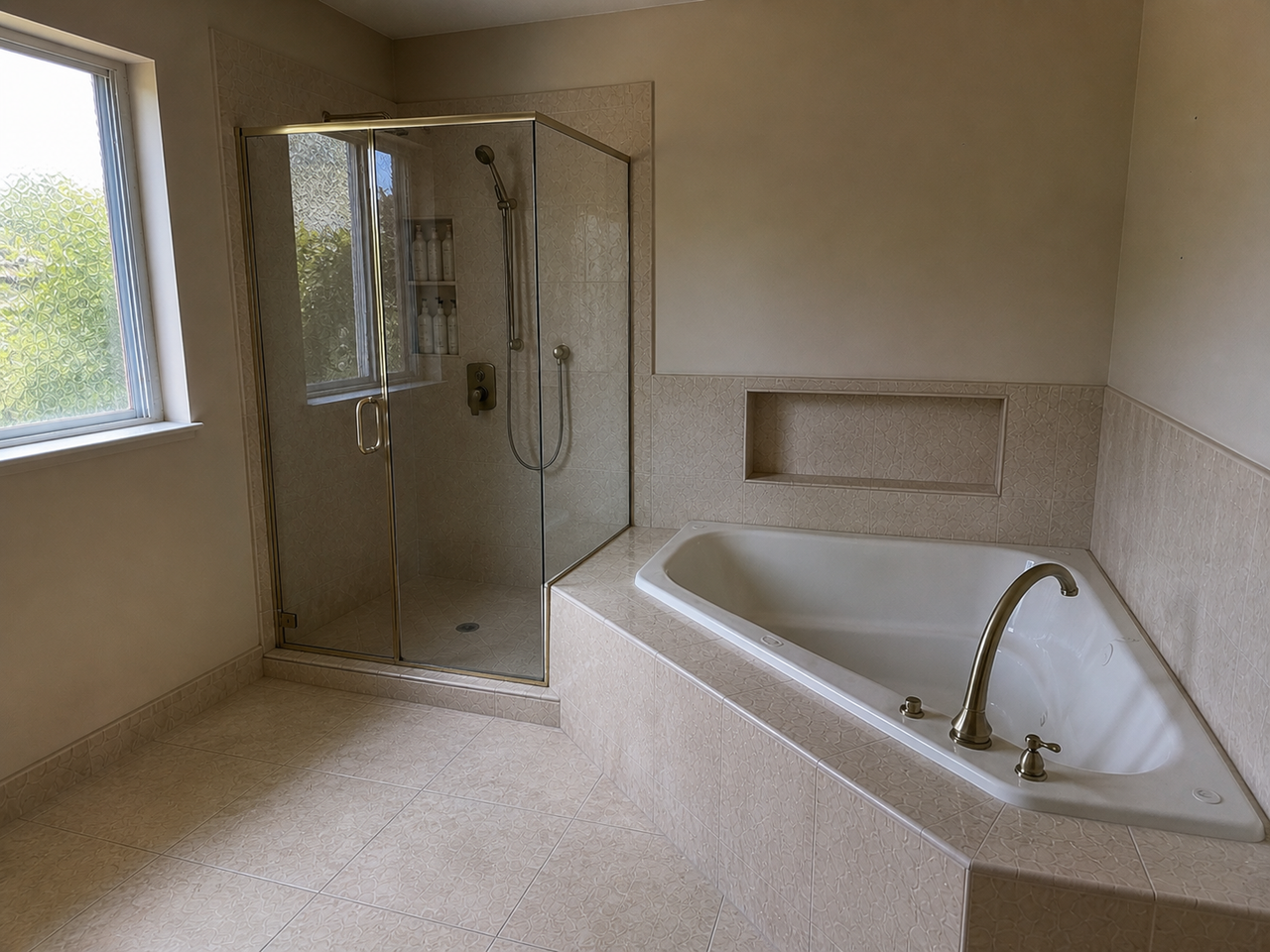
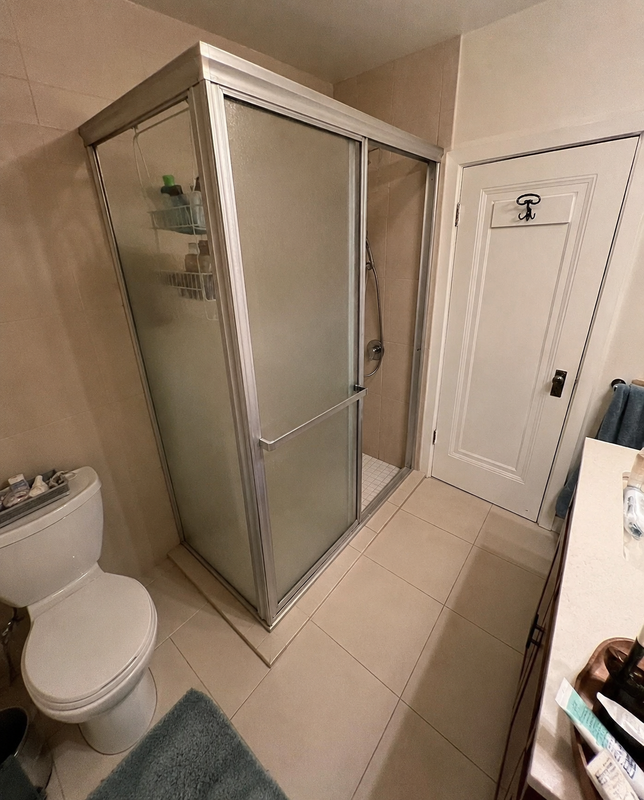
— Lisa, on the phone, Tuesday eveningLate-1990s Bay Area primary bath. You know the look. Beige speckled ceramic everywhere — floor, shower walls, the raised platform around the corner garden tub. Champagne bronze hardware. A framed glass shower door with the top bar. One recessed can light that didn’t quite reach the vanity. The kind of room that apologized for itself every morning.
The corner tub had probably been used twenty times in twenty years. The shower was 36 by 48 inches — technically functional, practically claustrophobic. Between the shower footprint and the tub platform, more than a third of the room was occupied by things nobody enjoyed.
Lisa wanted marble surfaces, a freestanding soaking tub, a ceiling rain head, double sinks. She’d had these saved on her phone since 2019. What she needed now, more urgently than anything, was to not have her parents brushing their teeth in the hallway bathroom while her father quietly judged her home improvement priorities for the past twenty years.
We measured everything Monday morning. By Wednesday we had the permit applications submitted to the City of Fremont Building Division — three of them: building, plumbing, and electrical. We requested expedited review, explaining the timeline. The city was reasonable. We had approvals by Friday.
Demo week. Four guys, two dumpsters, and a very understanding neighbor named Gary who brought us coffee on day two without being asked.
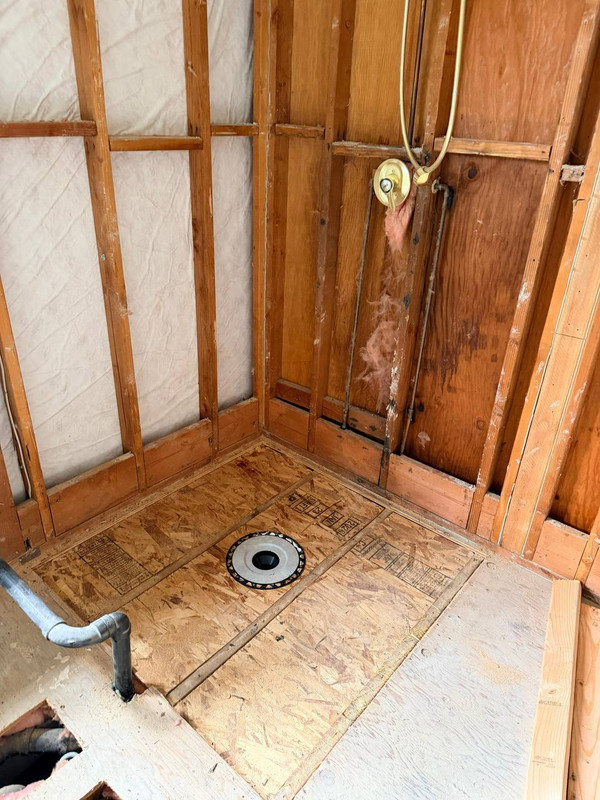
The shower tile came off the walls cleanly — the original adhesive had actually held well, which tells you the original crew did decent work. Behind it: drywall with felt paper, standard for 1998, not what we were going to put back. The shower pan was a pre-formed fiberglass unit set in mortar. Out it came. The corner tub platform — framed in 2×6 with cement board and tile — took most of day one to fully demolish. The framing inside was solid. No rot, no hidden surprises. This matters more than it sounds.
By Thursday of week one, the rough-in inspection was scheduled. The framing inspector walked the expanded shower footprint, checked the blocking we’d added between ceiling joists for the rain head supply line, looked at the crawl space drain reroute. Fourteen minutes. Signed off. The plumbing inspector came the same afternoon. The electrical inspector came Friday morning. All three signed the same week. We’ve been in Fremont long enough to know which inspectors move fast when you’re organized and the work is right.
Shower and tub platform demolished. Crawl space drain rerouted. Ceiling blocking for rain head. New electrical circuits roughed in. All three inspections signed off by Friday — this was the only way the rest of the schedule worked.
Schluter Kerdi board on all shower walls. Kerdi-Band on every seam, corner, and niche opening. Traditional mortar-bed float poured on the shower floor, sloped to the center drain at 1/4” per foot. Ceiling patched over rain head supply. Vanity wall drywalled.
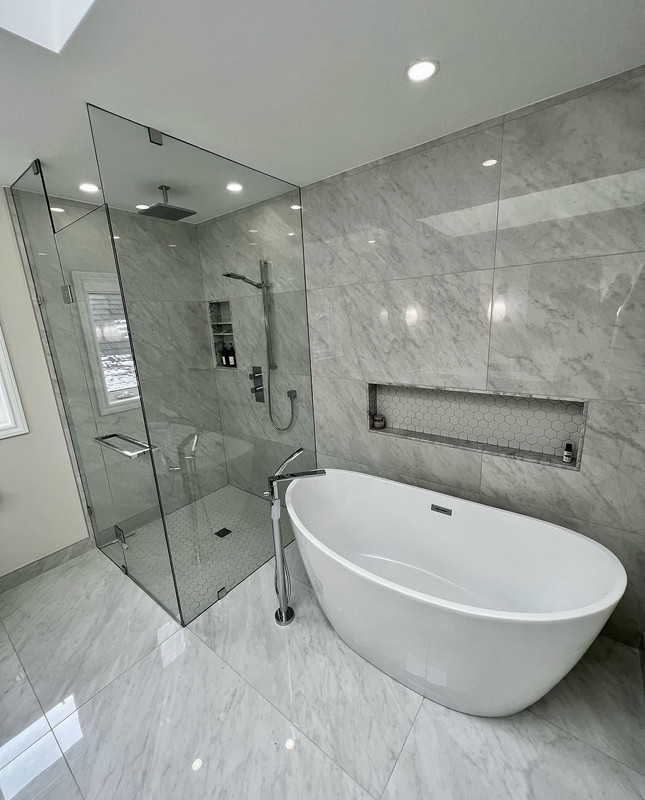
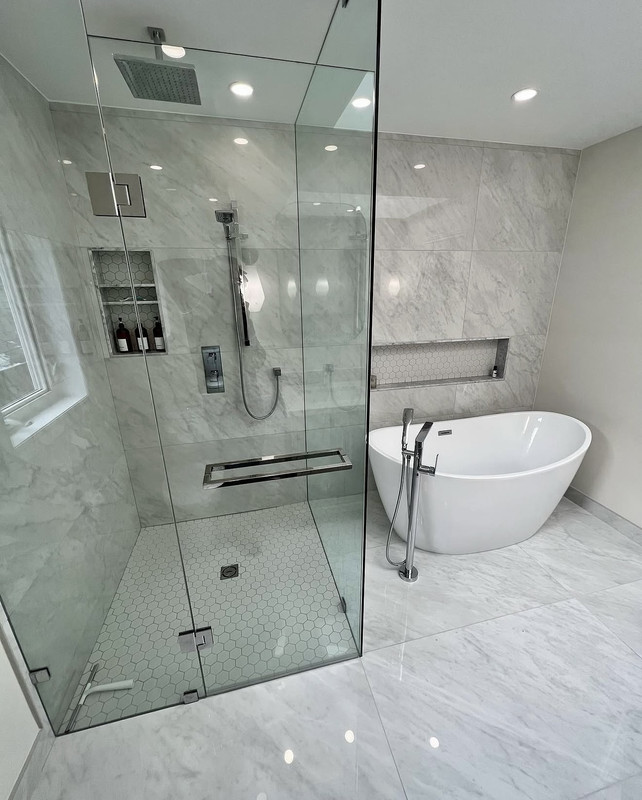
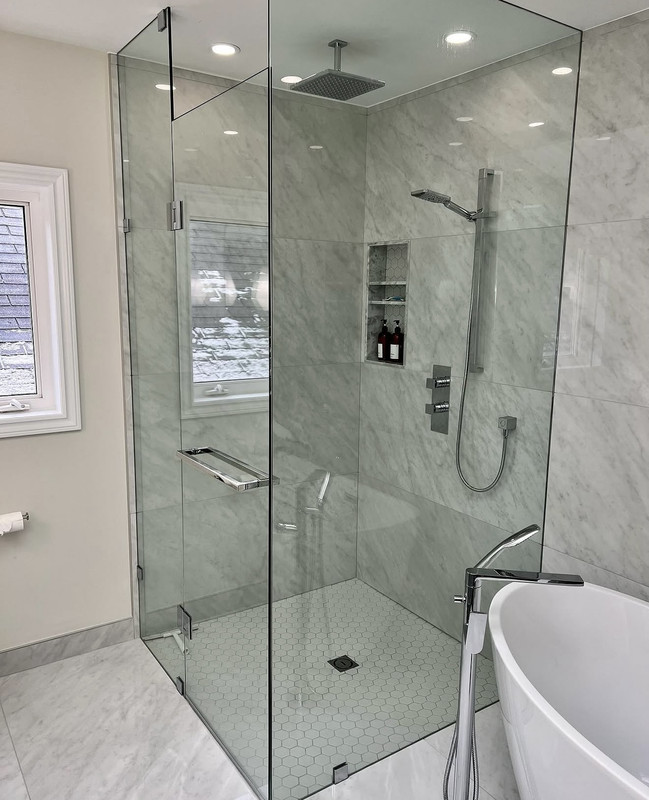
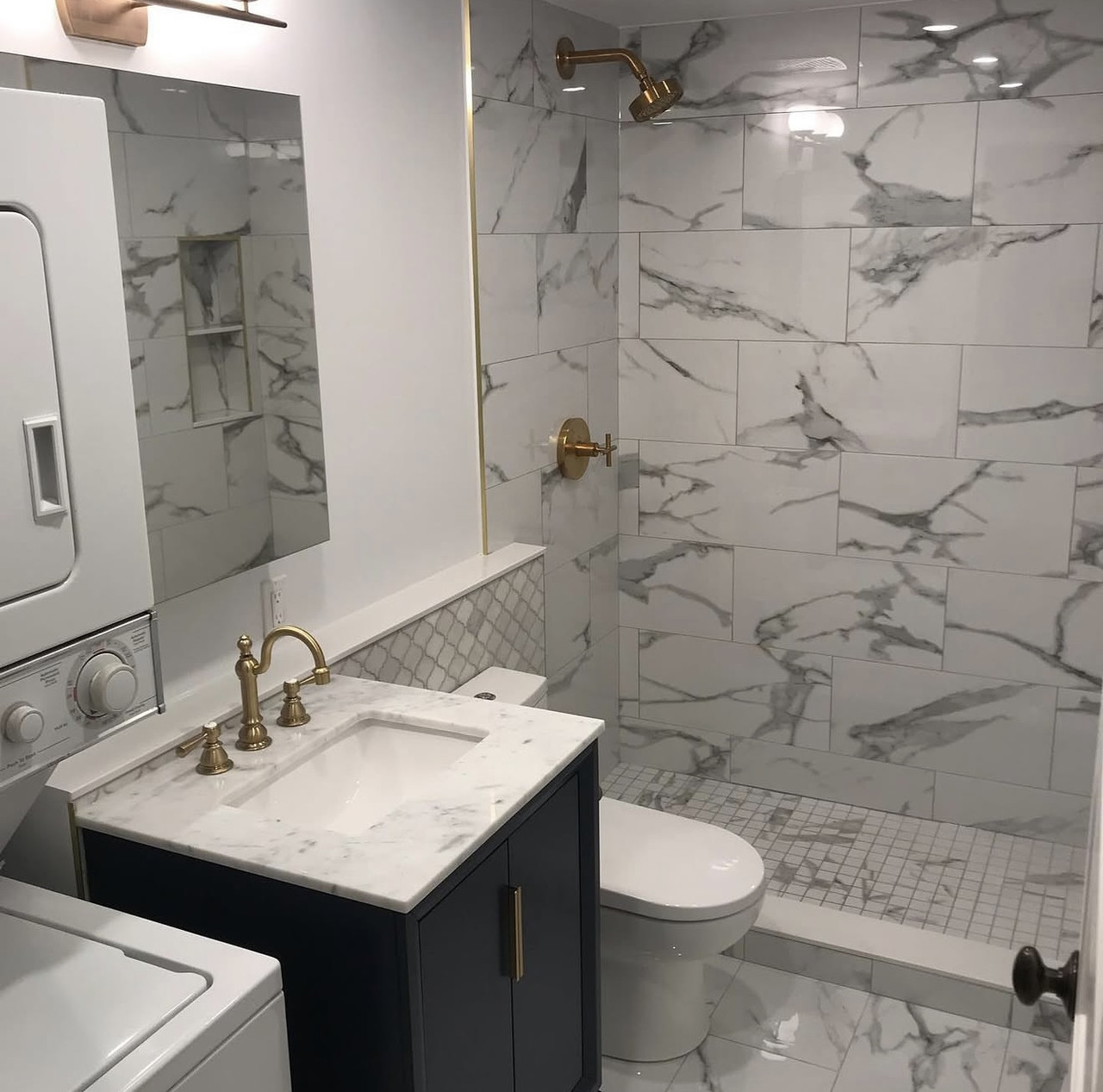
12×24 marble-look porcelain on shower walls, stacked horizontal. 2-inch hex mosaic on shower floor. 24×24 polished porcelain throughout the main floor. Niche interiors in matching hex. Three tile setters working in rotation — shower, floor, tub wall simultaneously. Grout and seal by end of Friday.
Glass templated Monday, installed Thursday. Shower valve trim, rain head, handheld set. Freestanding tub filler connected. Vanity and mirrors hung. Sconces wired. Final city inspection Wednesday — passed clean. Handoff Saturday. Two days before the flight from Vienna.
The new shower is nearly double the original footprint — the old 36×48 alcove plus the space where the tub platform sat. A meaningful change, and it required the mortar-bed floor to be poured in two sessions because of cure time. We couldn’t rush that part. Mortar beds need to set properly or the tile above them moves, and moving tile cracks grout, and cracked grout in a shower is how water gets somewhere it shouldn’t be. Some things just take the time they take.
The ceiling rain head was the detail everyone asked about most during the project. Ceiling-mount on a fixed drop arm, 12-inch square, chrome, positioned in the center of the shower so you stand directly under it. The supply line runs through the ceiling joist bay, strapped to blocking we added during rough-in, exiting through a chrome escutcheon plate at the ceiling. None of that is visible. What’s visible is a chrome square floating above a marble-look tile field, which looks effortless precisely because the rough-in work behind it was done before anything else closed up.
The thermostatic valve — the square chrome controls on the back wall — lets Lisa preset her temperature and turn the water on without standing cold while she adjusts. The rain head and handheld run independently or together. The rough-in for a thermostatic system is different from a standard pressure-balance valve and has to be planned from the start; you can’t retrofit it cleanly after the fact.
Glass was the variable we had least control over. Frameless tempered glass is templated after tile is grouted and sealed, because tile thickness changes the opening dimensions. We’d learned from experience: push the glass company early, get a bad cut. We waited until grout cured. They templated Monday of week four, turned around in three days. Install took four hours. We were not relaxed until it was in.
The freestanding tub sits where the old platform used to be. Floor-mount chrome tub filler — supply lines come up through the tile and subfloor, exactly positioned before tile went down. One of those decisions where a quarter-inch error in rough-in placement becomes visible forever, because the escutcheon plates on the floor are small and unforgiving. Our plumber marked the position before tile, set the stubs in the center of future tiles rather than across a grout joint. The finished chrome caps sit perfectly centered. Nobody notices unless it’s wrong.
The tub accent wall behind it got the same 12×24 porcelain running full height from floor to ceiling, with a wide recessed niche finished in hex mosaic. No framing above a tile line, no paint-to-tile transition. Full height. It costs more time; it looks dramatically better and makes the room feel taller than it is.
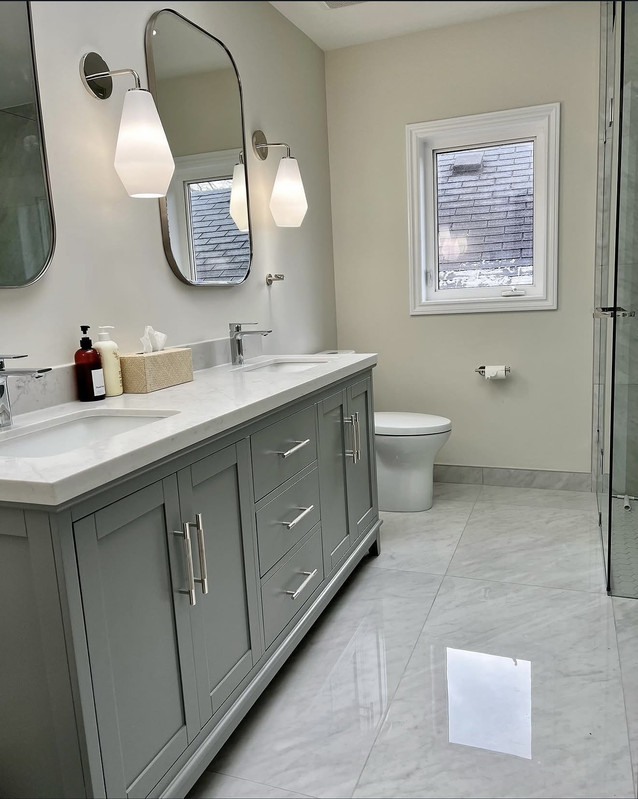
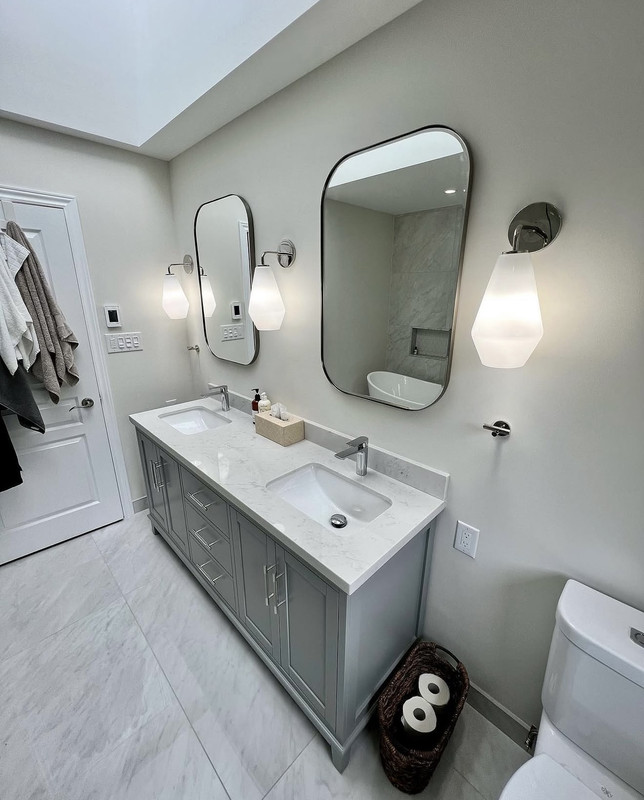
The vanity was David’s call, and he was not flexible about it: a 72-inch double, full stop. Twenty years of one-sink mornings. The new cabinet is a sage-green shaker with polished chrome bar pulls, white quartz countertop with subtle veining, two undermount rectangular sinks. Above each sink: a rounded-rectangular mirror with a thin dark frame, and a geometric white glass sconce on a chrome backplate. The sconces are on GFCI circuits — required when they’re within the proximity zone to the sinks under NEC 210.8. They also happen to be the detail that makes the room look finished in a way that a builder bar light never would have.
We did our own walkthrough Friday evening. Every grout joint. Every fixture. Ran the shower for twenty minutes and watched the drain and the glass seams. Checked the tub filler for any movement in the floor flange. Tested both GFCI outlets at the vanity. Found one thing: the caulk bead at the shower threshold had slightly lifted on one corner — normal first-cure movement. We redid it that night.
Lisa walked in Saturday morning. She stood in the doorway for a moment that felt longer than it probably was.
“My mother is going to think I renovated the whole house,” she finally said.
We handed her the keys and the permit closeout paperwork. Final city inspection had passed Wednesday — zero corrections across all four visits. She held the paperwork like it was evidence of something. Which it was.
Her parents landed at SFO on Monday. Her father reportedly walked into the bathroom, looked around, and said something in German that Lisa translated as: “Finally.”
We thought that was fair.
Four weeks is not how we prefer to do a project this size. The right timeline is six to eight — it gives the mortar bed more cure time before tile, gives the glass company a normal production window, gives everyone a little margin for the surprises that always show up in a 25-year-old house.
But the right timeline isn’t always the available one. Lisa needed four weeks, and she needed it done the right way — with permits, with licensed subs, with inspections that passed. Those two things together are what the job actually is. You figure out how to do both, or you tell the client you can’t help them. We don’t do the second one if we can possibly avoid it.
Her parents went home to Vienna a week later. The bathroom remained exactly as we left it, which is the only review that actually matters.