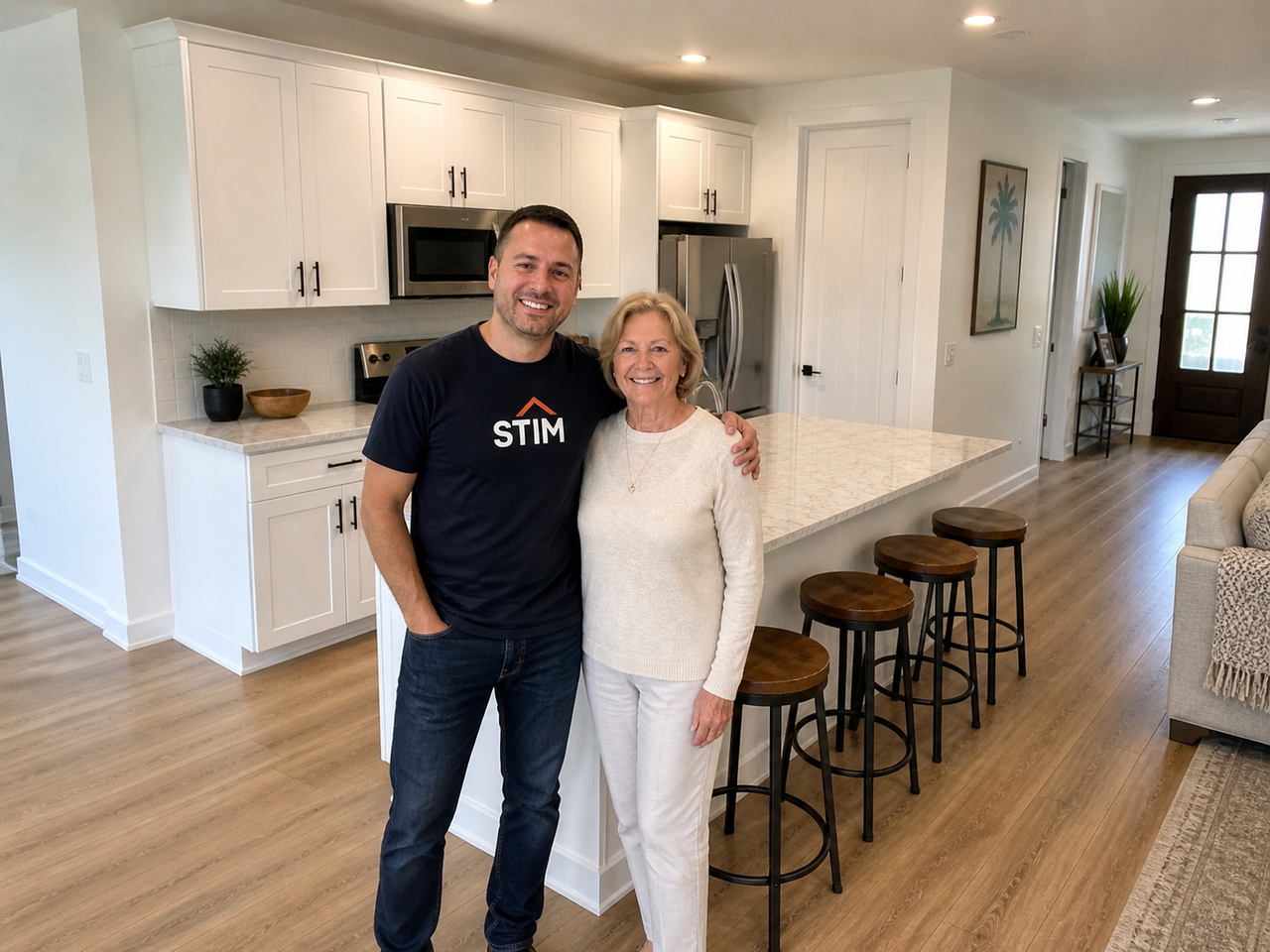
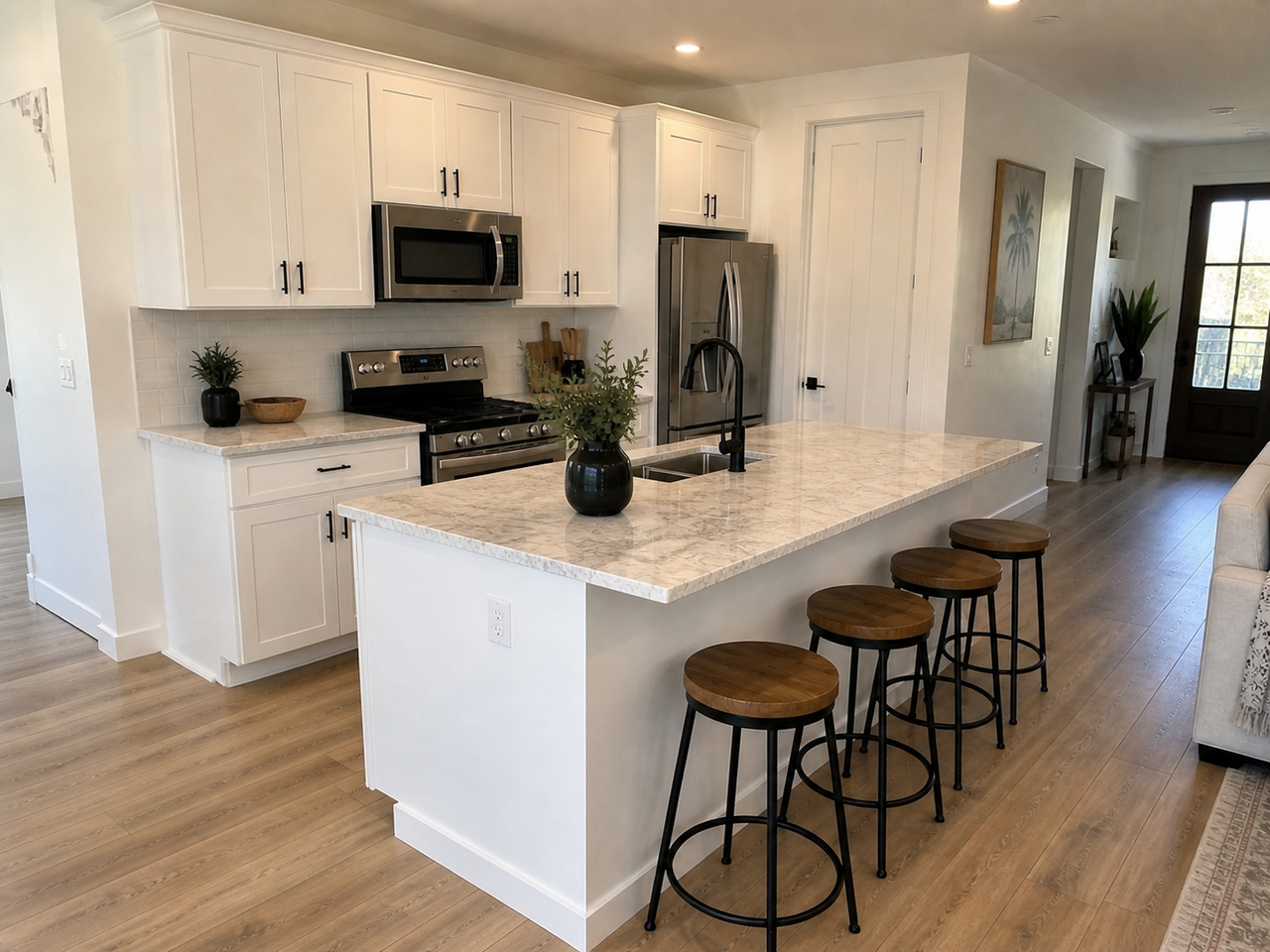
From “I Feel Sad in Here” to Her Favorite Room in the House
A full kitchen remodel with permits, inspections, electrical upgrades, plumbing, tile, quartz island, lighting, and final handoff.
Kitchen, bathroom, and full home remodeling with fixed pricing, professional design, permits, inspections, and 5-year warranty support.
Final contract price for agreed scope
Professional help with materials and style
Support after the project is completed
I’ll help you understand timeline, budget, and next steps.
Tell us what you want to remodel. We’ll reach out with the next step.
Clear categories. Real scope. Visual examples so you immediately understand what each service is about.
Full bathroom remodels, shower conversions, tub replacement, tile, vanity, toilet, lighting, mirrors, fixtures, waterproofing, flooring, fan replacement, plumbing and electrical updates.
Cabinets, countertops, backsplash, sink, faucet, flooring, lighting, appliances, island upgrades, layout improvements, plumbing, electrical, painting, finish materials and full kitchen renovation.
Whole-home upgrades: flooring, paint, doors, trim, bathrooms, kitchen, lighting, wall updates, layout improvements, finish selections, permits, inspections and project coordination.
Fast visual upgrades without a full remodel: paint, vanity replacement, fixtures, mirrors, lighting, hardware, caulking, shower panels, accessories, cleaning and cosmetic improvements.
Smart switches, lighting, thermostats, cameras, doorbells, locks, speakers, sensors, basic automation setup and clean integration into your daily home routine.
A clear remodeling process from the first conversation to warranty support. You always know what happens next and what to expect.
We discuss your goals, needs, budget, and expectations.
We visit your property, take measurements, and meet in person.
We prepare your quote within 1–2 days.
We send the quote, explain everything, and answer all questions.
We finalize scope, timeline, and payment schedule.
We handle construction, permits, inspections, and coordination.
We review everything with you before completion.
We provide long-term support after the project is finished.
The price in your contract is the final price for the agreed scope. It does not increase during the project.
The only exception: you personally request additional work, upgrades, or changes outside the original scope.
Remodeling should feel clear, organized, and protected. We built our process around the things homeowners care about most: price, quality, communication, and peace of mind.
We take care of the full process — from design and materials to permits, inspections, construction, and final walkthrough.
No surprise price increases after the project starts. The contract price is the final price for the agreed scope.
You know your number before signing. Clear scope, clear payment schedule, clear expectations.
We focus on clean execution, durable materials, and details that still look good years later.
Design guidance from a professional designer, so the final space looks intentional, not random.
Design, material planning, purchasing coordination, permits, inspections, scheduling, construction, updates, and final walkthrough.
Depending on the project, we may include bonuses like a toilet, LED lighting, or post-project cleaning.
Access to partner pricing and store discounts can help you save on selected finish materials.
We aim to give a fair, transparent price — not inflated numbers designed to be “negotiated down.”
Not just before and after photos. Here you can see how the project actually went: what the client wanted, what we found, how we solved it, and what the final result looked like.
A full kitchen remodel with permits, inspections, electrical upgrades, plumbing, tile, quartz island, lighting, and final handoff.
Tub-to-shower conversion with niche, tile to ceiling, LED mirror, and modern finishes.
A fast visual upgrade with new vanity, lighting, fixtures, paint, and fresh details.
A full kitchen remodel in Concord, CA — from the first phone call to happy tears on handoff day. We pulled every permit, passed every inspection, and found one very unpleasant surprise hiding under the old tile. Here's the whole story.
Linda called us in late October. Her voice was calm, a little tired — the kind of tired you hear from someone who's already gotten a handful of bids and hasn't loved what they've heard. She wasn't asking for anything crazy. "I'm 62," she told us. "The kids are grown, they've all moved out. It's just me and Dan now. I just want to actually enjoy cooking in my own kitchen. I just want it to feel bright."
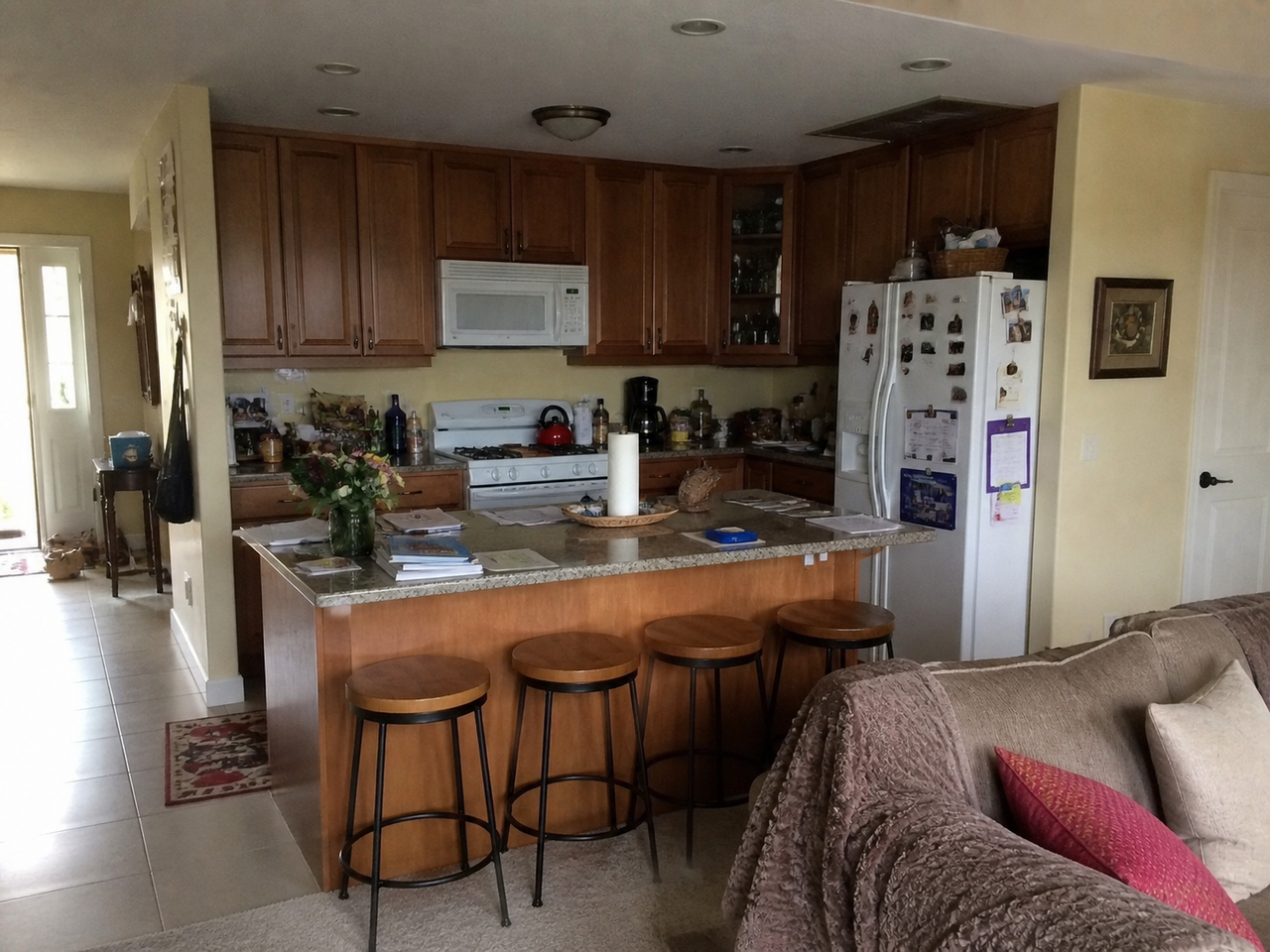
Two days later, we were at her place off Coronado Drive. Classic Concord late-90s build — warm, lived-in, a little tight in the kitchen area. Linda met us at the door with coffee and walked us straight to the island. "This is where I spend all my time," she said. "But honestly? Every morning when I walk in here, I feel a little sad."
We got it immediately. The dark honey-stained cabinets were eating every bit of natural light. The white appliances were pushing twenty years old. The tile floor had grout lines that hadn't been the same color in a decade. And the tiled countertop on the island — sure, it was practical once. Now it just looked like 2003 refused to leave. We knew exactly what needed to happen.
The good news: the layout actually worked. The island was in the right spot, the work triangle between the range, sink, and fridge made sense. No walls coming down — that's always a win for the budget. But a few things caught our eye right away, and we told her about all of them on the spot.
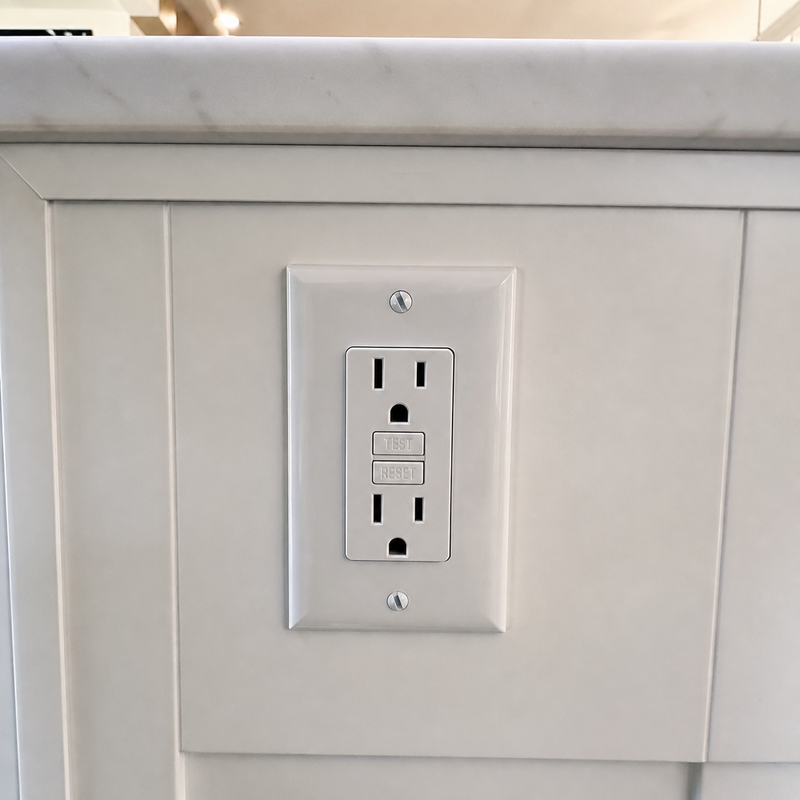
The outlets on the island had no GFCI protection. Under California Building Code and the NEC, that's required for any outlet within six feet of a sink — including island outlets, no exceptions. The moment we touched the electrical, everything had to come up to current code.
The over-the-range microwave was running in recirculation mode — basically pushing air through a charcoal filter and blowing it right back into the kitchen. Linda wanted a real exhaust hood that vented outside. That meant a new duct run and a mechanical permit.
The kitchen tile butted right up against the living room carpet. If we were replacing the floor — and we were — the transition detail had to be done right. A sloppy threshold is one of those things that bugs you every single day for the next ten years.
At our second meeting, we didn't just bring an estimate — we brought a permit list. Linda raised an eyebrow: "Do we really need all that? My neighbor redid their kitchen and didn't pull a single permit." We gave her the straight answer.
Unpermitted work in California is a ticking time bomb. It shows up on the disclosure when you sell. Your homeowner's insurance can deny a claim if the damage is tied to work that was never inspected. And most importantly — nobody ever checked if it was done right. We pull permits because we actually care what happens to your home ten years from now. We handled all the paperwork ourselves. Linda didn't have to drive anywhere or sit in a line at the permit counter. She signed one authorization form, and we took it from there.
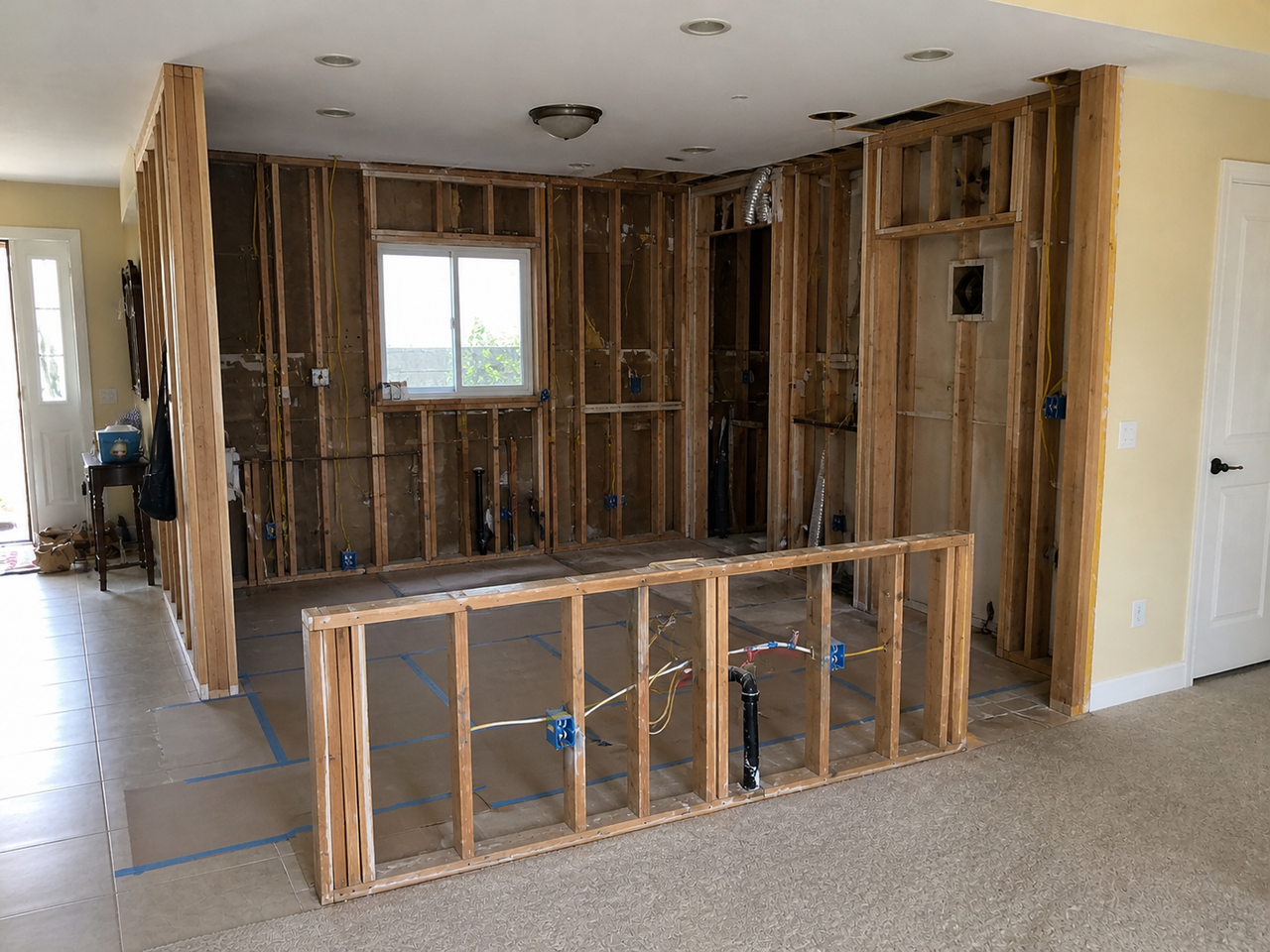
First day on the job always has that "let's see what we're actually dealing with" energy. You never really know what's hiding behind old finishes. Once the cabinets were out and the walls were open, you could see everything — the old wiring, the plumbing rough-in, the framing. This is the moment we love and dread at the same time.
When we pulled the tile off the island countertop, we found what we'd been hoping we wouldn't — a patch of moisture damage under the substrate. Old sink leak, someone "fixed" it by just tiling over it. The wood hadn't rotted all the way through — lucky break — but it needed to be dried out, treated with antimicrobial primer, and partially replaced.
We called Linda that same afternoon. Sent her photos, explained exactly what we found, and gave her the additional cost upfront. She went quiet for a second, then said: "Good thing you found it. Go ahead." That's how trust actually gets built — not with slick presentations, but with an honest phone call at an inconvenient moment.
The electrical on this kitchen wasn't dangerous. But it was outdated — and that's an important distinction. Breakers weren't tripping, lights came on, everything seemed fine. The problem is that code has changed significantly since this house was built in the late '90s, and what passed inspection back then doesn't fly under the current California Electrical Code.
Our electrician Ricardo — he's been with us for five years — started with a full panel audit. Good news: the panel was 200-amp, plenty of headroom. The issue was that the kitchen circuits were all lumped together, which under current NEC rules isn't acceptable for certain dedicated appliances.
GFCI stands for Ground Fault Circuit Interrupter — it's the outlet with the TEST and RESET buttons you've probably seen in bathrooms. In a kitchen, it's required on every outlet within six feet of any sink, including island outlets, regardless of whether there's a sink on the island or not. That's NEC section 210.8(A)(6), and California follows it.
None of the four island outlets in Linda's kitchen had GFCI protection. Ricardo swapped all four out and wired them correctly: the first outlet in the run has the protection built in, and the downstream outlets are covered by it. Clean, code-compliant, done right.
Linda's new fridge came with an ice maker and a built-in water dispenser. Per NEC 210.52(B)(1), that kind of appliance should be on its own dedicated 20-amp circuit. Ricardo ran a fresh 12 AWG line straight from the panel — no splices, no sharing. The dishwasher got its own dedicated 20-amp circuit too. The island outlets went on their own 20-amp circuit so running the stand mixer and the toaster oven at the same time doesn't trip the breaker mid-batch of cookies.
Linda never mentioned lighting as a separate item. But we could see it: the old recessed cans were putting out that flat, depressing overhead light. We suggested adding LED strip lights under the upper cabinets — warm white, 3000K, on a dimmer. She hesitated. "That's extra money." We said: let us put it in, cook dinner with it on one night, and if you don't love it, we'll take it out. Nobody took it out. It's now the first thing she shows people when they come over.
Electrical inspection happened mid-project, while the walls were still open. The inspector went through every connection point. Zero corrections. Ricardo didn't even look nervous — because he had nothing to be nervous about.
Most homeowners think of kitchen plumbing as: sink, faucet, done. But behind that simplicity is a whole web of decisions — where the sink sits, how supply lines are run, where the drain goes, whether there's backflow protection, and whether the trap is properly vented. Get any of those wrong and you've got problems that don't show up until they really show up.
In the original layout, the sink was tucked into a corner section, deep in the back of the workspace. When you're doing dishes, you're facing the wall with your back to the living room and to whoever's sitting at the island. Linda had just gotten used to it. We suggested moving the sink onto the island — right where you can see the room, talk to Dan, and actually enjoy being in the kitchen.
That required a plumbing permit and a lot more work than just swapping out a fixture. Our plumber Marco ran new hot and cold supply lines under the subfloor. The drain was stubbed out with the right slope — a minimum of 1/4 inch per foot of run, as required under California Plumbing Code section 708. Not a suggestion. The law.
When a sink is on a freestanding island, venting the trap gets complicated. Without proper venting you get that gurgling sound every time water goes down — not just annoying, it's a code violation. Marco installed an AAV — an air admittance valve — inside the island cabinet, accessible through the door. Under CPC section 908, that's a perfectly code-compliant solution. The inspector signed off on it. It works silently. Problem solved.
Linda knew right away she wanted matte black. We walked her through the checklist: spout height (for an island sink, you want at least 10 inches of clearance), pull-down sprayer with a separate spray mode, and compatibility with the water pressure in Concord, which typically runs 60–80 psi. She ended up with a 16-inch high-arc pull-down in fingerprint-resistant matte black with a ceramic disc cartridge. Marco pressure-tested everything. Not a drip, not a wobble in the base.
When Marco disconnected the old dishwasher, he found the drain hose had been run without a high loop and without an air gap — meaning dirty water from the sink could siphon right back into the dishwasher. Under the CPC, that's a straight-up sanitary code violation. He installed a proper air gap on the countertop — that small chrome cap next to the faucet that most people assume is decorative. Linda didn't want "another hole in the countertop." Now she's the one explaining to dinner guests what it does and why their kitchen probably doesn't have one.
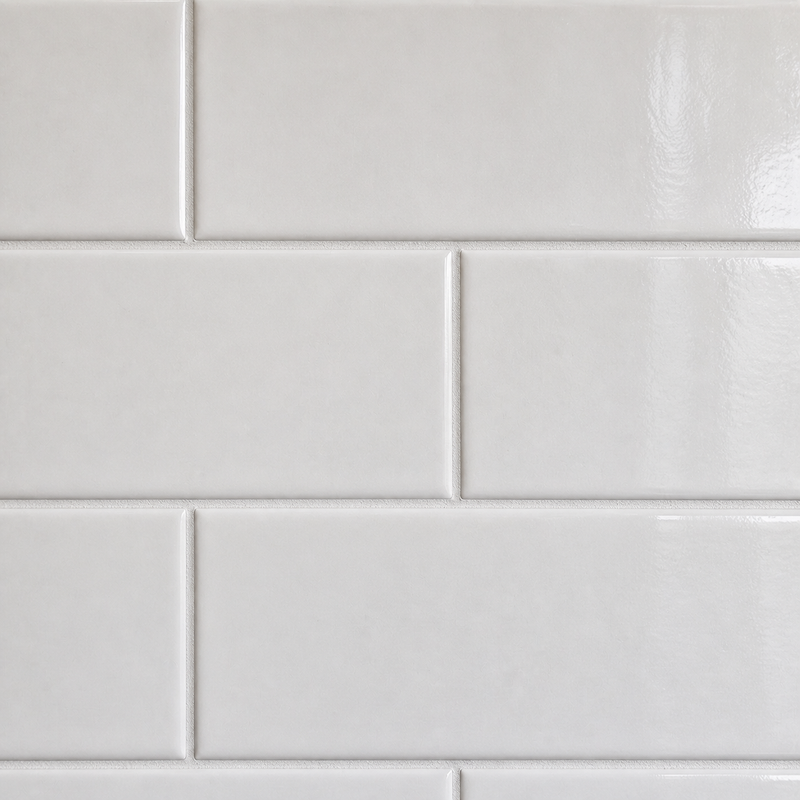
Subway tile is a classic for a reason. White 3×6 rectangles in a running bond — half-brick offset — has been working since the New York City subway opened in 1904, and it's going to keep working for the next hundred years. But "simple" tile requires perfect execution. There's nowhere to hide. Any wavy line, any uneven grout joint — it all shows up immediately.
Our tile guy Alejandro won't set a single tile until the substrate is right. Before he touched a tile, he spent half a day on prep — demoed the old backsplash, floated the surface with leveling compound, checked it with a 6-foot level. Across the entire backsplash — countertop to the bottom of the uppers — less than 1/8 inch of variation. Only then did he start laying out the field.
Most DIYers start tiling from the bottom — off the counter. Alejandro starts by finding the optical center of the most visible section of wall and snapping a horizontal line from there. That way the tile reads as balanced and intentional from across the room. At the corners, he never cuts tile down to a sliver — the smallest piece is always at least half a tile wide. Takes longer to plan. Looks exponentially better in the end.
Linda's first instinct was bright white grout. We gently pushed back — white grout in a working kitchen is beautiful on day one and a full-time job after that. We brought in samples: Mapei Warm Gray #112 and Mapei Biscuit #35, held them up under actual kitchen lighting. The warm gray won in about thirty seconds. Alejandro grouted in two passes, 1/16-inch joints. After cure, the whole surface got sealed with penetrating silicone sealer to lock out moisture and grease.
After everyone had left, Alejandro came back and walked the entire backsplash one more time with a flashlight held at a raking angle. Low-angle light catches any lippage or hollow spots invisible under normal overhead lighting. He found two small areas where the mortar had pulled slightly from a bullnose trim piece. Reglued both. Left around midnight. Linda will never know that happened. But that's what actual quality control looks like — not a marketing line, but a guy with a flashlight at midnight in someone else's kitchen because it wasn't quite perfect yet.
The day before the official final inspection, we ran our own. Checked every cabinet for level and alignment. Pressed on every tile. Tested every GFCI outlet. Ran the faucet and checked under the island for drips. Ran the dishwasher through a full cycle. Held a piece of paper over the range and turned on the hood — it pulled the paper flat against the filter in under a second.
We found one thing: a piece of crown molding above the upper cabinets had a hairline gap at an inside corner. Re-caulked and touched it up that same evening. By the time Linda walked in, it didn't exist.
The City of Concord inspector arrived the following morning. He went through all four permits — checked the outlets, looked under the island at the trap and air gap, went up into the attic to verify the duct connection. Signed off on everything. No corrections, no call-backs. All four permits closed out clean.
Linda came by on a Friday morning around 10. We'd asked her to stay off the job site for the last three days — we wanted the reveal to land all at once. She stood in the doorway for a solid ten seconds, just taking it in. Then she walked to the island, ran her hand across the quartz countertop — right where that old cracked tile used to be — and turned around to face us.
"You built what I had in my head but couldn't explain," she said. And then she cried. The good kind.
Dan had been standing a few steps behind her the whole time. He's not a big talker. He just walked up and shook our hands. Firm grip. That was enough.
It's not about the before-and-after photos — though they speak for themselves. We share the full story because we want you to understand what a remodel actually is: a few weeks where you let strangers into your home and trust them with the most personal space you have.
We pull permits because we respect your home and your investment in it. We call you the same day we find a problem — not at the end of the job. We go to the showroom with you, because picking materials shouldn't feel like homework. We do our own final walkthrough before you ever set foot inside, because what you see on day one matters to us.
Ricardo runs a dedicated circuit because it's the right way to do it — not because the inspector is watching. Marco installs the air gap because it protects you — not because it's the path of least resistance. Alejandro comes back at midnight with a flashlight because he can't leave something that isn't right.
Linda texted us about a month after we wrapped up. She said she's been waking up thirty minutes earlier than usual — just to sit at the island with her coffee before Dan gets up. "I couldn't explain why I felt sad in there before. Now I can't explain why I feel so good." That's why we do this work.
Tell us about your space and we'll come take a look — no pressure, no sales pitch. Just an honest conversation about what's possible and what it'll actually cost.
Let's Talk About Your Project ↗Short vertical videos from homeowners sharing their experience, the process, and the final result.
Video reviews help you see the human side of the project: communication, trust, expectations, and how clients felt after the work was completed.
Instead of only telling you we care about the result, we show what clients say during and after their projects.
Swipe through screenshots from real client conversations.
Leave your contacts and your STIM representative will reach out, answer your questions, and help you understand the next step.